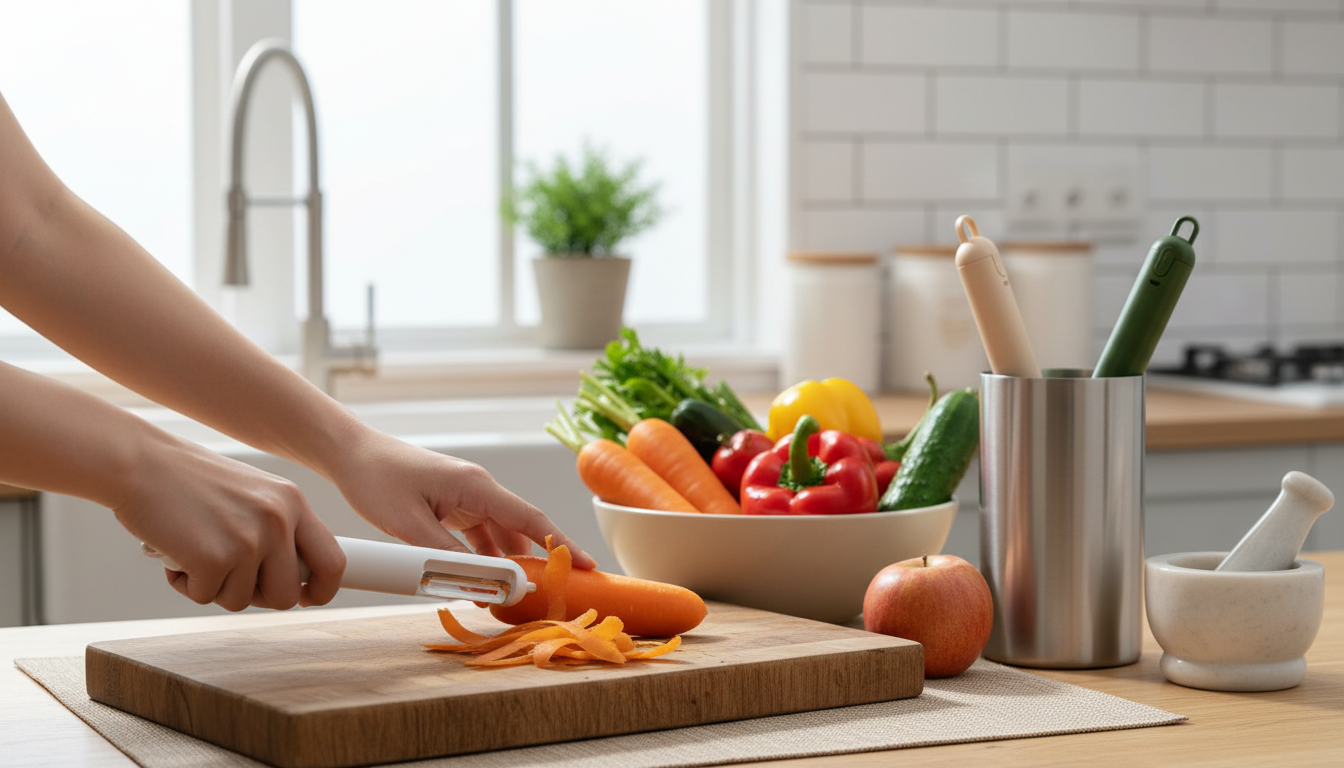
A dependable peeler is one of the quickest ways to make everyday cooking feel easier. A multifunctional stainless steel vegetable and fruit peeler is designed for smooth peeling, controlled handling, and quick cleanup—ideal for weeknight prep, baking, and fresh snack plates. When the blade glides instead of drags, you get neater results, less waste, and a faster path from cutting board to pan.
A multifunctional peeler earns its keep by handling more than one type of task without feeling fussy or fragile. Instead of switching tools for different skins and textures, a versatile peeler stays consistent across a variety of produce.
Peelers aren’t just for potatoes. Once you have a reliable stainless steel option on hand, it tends to show up in more meals than expected—especially when you’re trying to keep prep simple.
For food safety fundamentals—especially when you’re peeling produce that will be eaten raw—follow reputable guidance on clean hands, clean surfaces, and avoiding cross-contamination from sources like the FDA and USDA Food Safety and Inspection Service.
Stainless steel is a go-to material for kitchen tools because it’s designed to hold up to daily use and frequent washing. With a peeler, that durability translates to smoother passes and a steadier feel in the hand.
Comfort and control aren’t just “nice to have”—they help reduce slips. A stable grip is especially useful when working quickly, peeling rounded produce, or handling wet foods right after rinsing.
For additional safe-handling basics (especially around washing, cutting boards, and cleanup), the Mayo Clinic’s food safety overview is a helpful reference.
Most peelers perform best when they’re cleaned immediately and stored so the edge isn’t getting knocked around in a crowded drawer. A few small habits make a big difference in how smoothly the blade continues to peel.
| Task | What to do | Why it helps |
|---|---|---|
| After peeling potatoes | Rinse immediately, then wash with soap | Starch residue can dry and cling |
| After peeling citrus or sticky fruit | Use a soft brush around the blade | Removes oils/sugars that trap odors |
| Weekly check | Inspect for nicks and buildup | Keeps peeling smooth and reduces slipping |
| Storage | Keep blade protected from other utensils | Helps preserve edge and prevent scratches |
For a simple, do-it-all tool that fits daily cooking, the Multifunctional Stainless Steel Vegetable & Fruit Peeler is a practical choice. Its stainless steel build is well-suited for repeated prep sessions—whether you’re peeling potatoes for dinner, shaving cucumber for a quick salad, or prepping apples for baking.
Yes—when the blade is sharp and the grip is secure, it can handle firm vegetables and softer fruits. Use lighter pressure on delicate skins to avoid bruising or removing too much flesh.
Rinse it right away, then wash with warm soapy water and use a small brush near the blade area. Dry promptly and store it with the blade protected to help keep the edge in good condition.
This is often caused by a dulled or nicked blade, residue buildup near the edge, or pressing too hard. A thorough cleaning and gentler pressure typically improve results; if it still snags, it may be time to replace the peeler.









Leave a comment