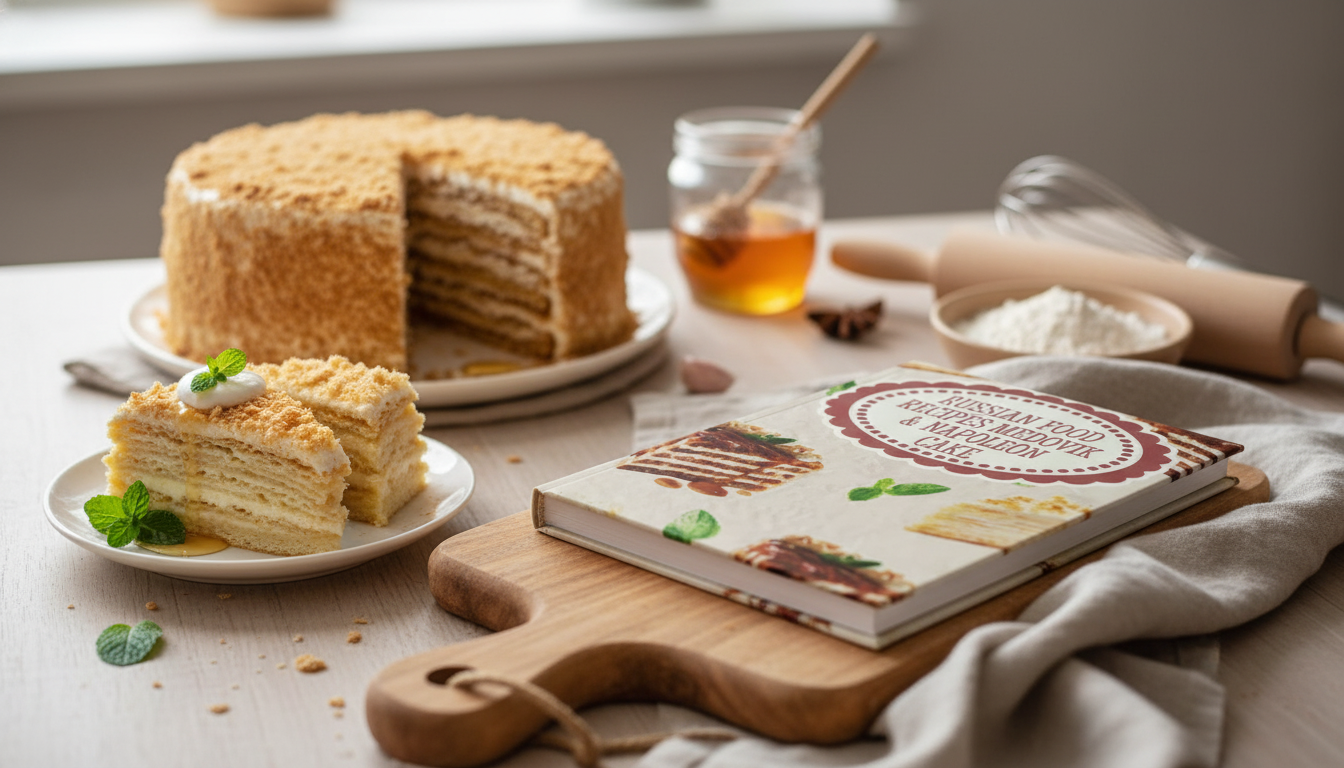
Medovik (Russian honey cake) and Napoleon cake sit in a special category of desserts that get better with time. Both rely on multiple thin layers, a generous cream filling, and a rest period that transforms separate parts into a sliceable, cohesive cake. The payoff is big: neat strata, balanced sweetness, and a texture that feels bakery-finished.
These classics look similar once sliced, but they behave differently in the oven and during assembly. Medovik leans warm and caramel-honey, while Napoleon leans buttery and vanilla-custard. Neither is complicated in a single step; the challenge is maintaining consistency across many repeated layers.
| Feature | Medovik (Honey Cake) | Napoleon Cake |
|---|---|---|
| Signature taste | Honey and caramel notes | Buttery pastry with vanilla-forward filling |
| Layer style | Thin soft layers that become tender | Flaky crisp layers that mellow |
| Best filling | Sour cream or cream-based frosting | Custard (pastry cream) or diplomat-style cream |
| Ideal rest time | 8–24 hours chilled | 6–24 hours chilled (depending on desired crunch) |
| Common challenge | Overbaking thin layers | Soggy layers or runny custard |
A calm workflow makes layered cakes feel manageable. Setting up a “roll, bake, cool, repeat” station prevents dough from warming too much and keeps layer thickness predictable.
If you like step-by-step structure, the Russian Food Recipes Medovik & Napoleon Cake eBook (digital download) is a handy way to keep timing, layering order, and consistency notes in one place.
Medovik’s signature flavor comes from honey gently heated with sugar and butter (often over a water bath). The goal is a deeper color and smoother mixture, not a hard boil. Overheating can push honey toward bitterness and make layers bake up overly firm.
Napoleon is built on contrast: crisp pastry sheets and a smooth, thick cream. Flake depends on cold fat and minimal handling, so treat temperature as a core ingredient. For the filling, a properly cooked custard should be thick enough to mound slightly and hold clean edges once chilled. (For a general overview of custard types, see Encyclopaedia Britannica — Custard.)
For refrigerator organization—especially when storing custard, eggs, and finished cakes—an airtight setup helps. A Refrigerator Egg Storage Box can keep ingredients tidy while you’re staging a multi-step bake.
These cakes reward scheduling. A simple plan is: bake layers one day, assemble and chill overnight, slice the next day. Keep the cake covered to prevent drying and odor absorption. The USDA’s refrigeration guidance is a helpful reference for safe cold storage practices: USDA Food Safety and Inspection Service — Refrigerator Storage.
When it’s time to serve, a sturdy set makes dessert feel occasion-ready. The 24-Piece High-End Stainless Steel Cutlery Set for 6 is a polished option for clean, consistent slices at the table.
Bake the layers 1–2 days ahead, then assemble and chill 8–24 hours before serving for the best slicing and texture. Both cakes keep well covered in the refrigerator for a few days, and fully assembled cakes can be frozen and thawed overnight in the fridge.
Uneven layers usually come from inconsistent rolling thickness or baking time variations across batches. Roll using a template, dock Napoleon pastry to prevent large bubbles, cool layers flat, and chill the assembled cake before trimming so the stack cuts cleanly.
Choose a tangier, less-sweet filling such as sour cream frosting for Medovik or a lightly sweetened diplomat-style cream for Napoleon. Reducing sugar slightly and adding acidity (like sour cream or a touch of lemon) can balance sweetness without making the cake taste flat.













Leave a comment