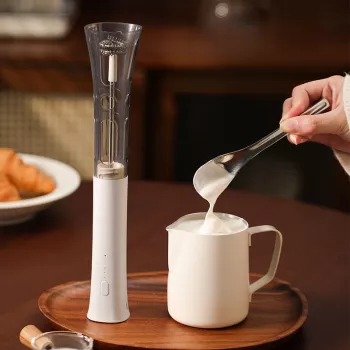
A handheld electric frother makes café-style foam and quick mixes possible in minutes—whether setting up a morning latte at home, upgrading instant coffee at work, or packing a lightweight tool for trips. With a small motor and a fast-spinning whisk, it’s built for simple routines: foam a little milk, blend a powder smoothly, and rinse clean in seconds.
If you enjoy cappuccinos, matcha, or creamy hot chocolate but don’t want a bulky appliance on the counter, a portable milk frother is a practical middle ground between a spoon and a full espresso setup.
A handheld electric frother uses a compact motor to spin a whisk tip at high speed. That motion pulls air into liquids (aeration) and breaks up powders quickly, creating a smoother texture than shaking or stirring alone.
Foam isn’t only about the tool—it’s also about what you froth and how warm it is. Different milks create different bubble structures, which changes the look, feel, and pourability of the foam.
| Method | Foam quality | Portability | Setup/Cleanup | Best use |
|---|---|---|---|---|
| Handheld electric frother | Light to medium foam; can be close to café texture with practice | High | Fast; rinse whisk after use | Lattes, cappuccinos, matcha, cocoa, quick mixing |
| French press | Thicker foam; more volume | Medium | More parts to wash | Large servings; multiple drinks |
| Steam wand | Best microfoam; heats and textures | Low | More involved; machine maintenance | Café-style milk drinks at home |
A small technique tweak can make the difference between airy bubbles and a smoother, tighter foam that pours well.
For milk safety and handling basics—especially when serving higher-risk individuals—follow common-sense dairy guidelines from the U.S. Food & Drug Administration.
A portable frother earns its spot in the drawer when it becomes the “fix-it-fast” tool for clumps, separation, and thin texture.
For deeper background on beverage quality concepts and preparation standards, the Specialty Coffee Association (SCA) offers useful references.
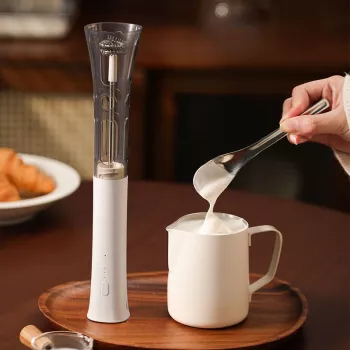
The Portable Electric Milk Frother Handheld Coffee Whisk for Home and Travel Use is designed for fast foam and mixing at home, in the office, or on the road. The compact handheld shape fits easily in drawers and bags, and it’s a simple upgrade for instant coffee or ready-made espresso drinks that benefit from a creamy top layer.
It can create fine, creamy foam with the right milk and technique, especially when you finish frothing slightly deeper to tighten bubbles. A steam wand still leads for true microfoam because it heats and textures at the same time, but a handheld frother can get impressively close for daily lattes.
No—both warm and cold milk can froth well. Warm milk tends to foam more easily for hot drinks, while very cold milk helps build thicker cold foam; avoid overheating because it can flatten foam and add scalded flavors.
Rinse the whisk immediately after use, then spin it briefly in warm soapy water, rinse again, and dry. Don’t immerse the handle unless the model is specifically rated as water-resistant.









Leave a comment