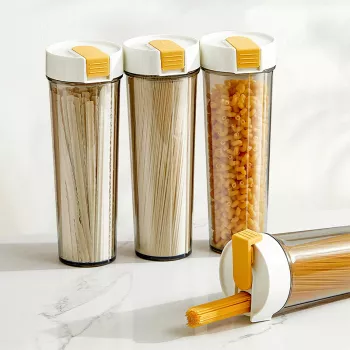
A clear, moisture-resistant kitchen jar makes everyday staples easier to see, pour, and keep fresh. This container is designed for pantry organization—ideal for pasta, snacks, cereal, baking ingredients, and anything that benefits from a dry, sealed home.
Most pantry mess starts the same way: opened bags that get rolled down “for now,” cracker sleeves that won’t stay closed, and boxes that spill the moment you tip them. A jar-style storage container simplifies that routine by giving dry goods one consistent place to live.
When storage is both clear and sealed, it supports better habits without adding extra steps. Instead of hunting through crowded shelves, you can identify what you need at a glance, pour more cleanly, and return the container to a “zone” that stays consistent week after week.
| What to store | Why it benefits | Simple tip |
|---|---|---|
| Spaghetti or long pasta | Less breakage than squeezing into small canisters | Stand bundles upright if height allows; keep a label on the lid |
| Short pasta (penne, fusilli) | Stays dry and pourable | Leave a little headspace to pour without spills |
| Crackers and chips | Helps maintain crunch after opening | Close the lid immediately after serving; avoid storing near the stove |
| Nuts and trail mix | Slows softening and flavor transfer | Store away from strong-smelling spices |
| Flour, sugar, oats | Reduces clumps caused by humidity | Use a dedicated scoop to avoid introducing moisture |
A clear jar works in more than one spot, so it can follow your household’s rhythm—busy weekday breakfasts, after-school snacks, or weekend baking sessions.
For added structure, pair pantry jars with a few category containers in the fridge. Items like eggs are easier to count and protect in a dedicated bin such as the Refrigerator Egg Storage Box, keeping “pantry-to-fridge” meal prep feeling just as organized.
Even a good container performs best when it’s used with a few simple habits. Moisture is the main culprit behind staleness, clumping, and odd texture changes—especially in humid climates or in kitchens where cooking generates lots of steam.
For broader guidance on safe storage and shelf-life expectations, authoritative references like the USDA FoodKeeper App and the FDA food storage guidance offer helpful, practical standards.
Clear containers look best when they stay truly clean—especially after powdered ingredients or oily snacks. A quick routine keeps the container easy to use and helps avoid “mystery crumbs” mixing into fresh refills.
If fruit snacks, citrus wedges, or mix-ins are part of your routine, prep tools can also cut down on sticky mess before it reaches the pantry. The Stainless Steel Fruit Prep Tool Set – Corer, Scoop & Carving Knife helps streamline prep so storage stays cleaner overall.
The Transparent Pasta & Snack Storage Container – Moisture-Proof Kitchen Jar is suited to dry pantry staples and everyday snacks. Its clear body supports faster meal prep, easier portioning, and less packaging clutter—especially for households that rotate through pasta, crackers, cereal, or baking basics and want one clean, consistent storage system.
Yes—rotate by emptying and cleaning between items to reduce flavor transfer and crumb buildup. Make sure the container is completely dry before refilling so cereal and snacks stay crisp.
It helps by limiting how much humid air enters the container after opening. Crisp foods tend to go stale faster when they’re repeatedly exposed to moisture in the air.
Only store fully dry ingredients, use a dry scoop, and keep the jar away from steam and heat sources. After washing, dry the container completely before adding flour or sugar back in.








Leave a comment