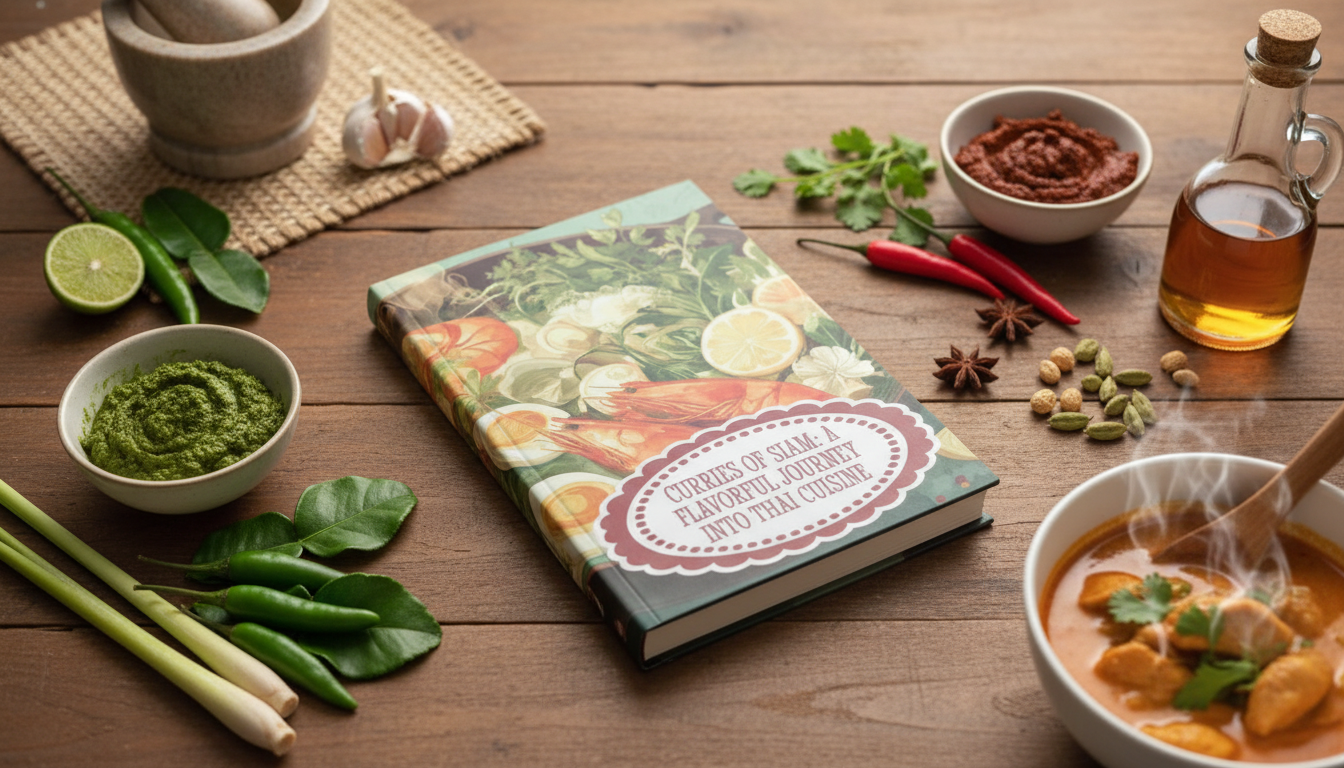
Thai curries have a way of tasting both familiar and surprising at the same time: rich coconut, sharp herbs, gentle sweetness, and a bright, salty finish that keeps each bite lively. Curries of Siam: A Flavorful Journey into Thai Cuisine | Authentic Thai Food Recipes Curries eBook is built for home cooks who want confident, repeatable results—whether the goal is a weeknight green curry or a slow-simmered Massaman that tastes like it came from a Thai kitchen.
Instead of relying on vague directions, the approach is practical: understand what creates that signature Thai “lift,” learn how to treat curry paste and coconut milk correctly, then finish with the balancing ingredients that make the bowl taste vivid rather than heavy. For background on Thai ingredients and culinary traditions, see Encyclopaedia Britannica’s overview of Thai cuisine.
Thai curries stand out because they’re engineered for contrast—aroma against heat, richness against acidity, and sweetness against salt. A few fundamentals make the difference between “coconut stew” and a curry that tastes layered and restaurant-bright.
| Curry style | Typical flavor profile | Common proteins/vegetables | Best finishing touches |
|---|---|---|---|
| Green curry | Herbal, spicy, aromatic | Chicken, fish balls, Thai eggplant, bamboo shoots | Thai basil, lime |
| Red curry | Warm, bold, medium-hot | Duck, shrimp, pumpkin, long beans | Kaffir lime leaf, sweet basil |
| Panang curry | Thick, nutty, slightly sweet | Beef, chicken, bell pepper | Crushed peanuts, kaffir lime zest |
| Massaman curry | Spiced, mellow, slightly tangy | Beef, chicken, potato, onion | Tamarind, roasted peanuts |
| Yellow curry | Mild, savory, gentle spice | Chicken, potato, carrot, onion | Cilantro, lime |
Good Thai curry is more about method than mystery. Once the key cues are familiar—how long to bloom paste, what a properly reduced coconut base looks like, when to season—nearly any curry style becomes approachable.
If the goal is a dependable starting point, the Curries of Siam eBook is designed to function like a reusable kitchen playbook—especially helpful when rotating proteins, swapping vegetables, or scaling recipes up for leftovers.
A well-stocked curry pantry doesn’t need to be huge, but it should be intentional. A few core items do most of the heavy lifting, and knowing what each one contributes helps avoid over-salting or over-sweetening.
For basic nutrition and ingredient lookup details while shopping, USDA FoodData Central can be a useful reference for common pantry items.
For detailed leftover safety guidance and storage timelines, refer to USDA FSIS leftovers and food storage.
Heat varies by curry type and the amount of chilies in the paste. To lower spice without dulling flavor, use fewer chilies (and remove seeds), add a bit more coconut milk for cushioning, and boost aroma with Thai basil, kaffir lime leaf, and fresh lime at the end.
Yes—use soy sauce or tamari for saltiness, then add a touch of extra lime and a small amount of sugar to keep the finish balanced. For more depth, mushroom seasoning or another vegetarian umami option can help replace some of fish sauce’s savory punch.
Common causes are under-bloomed paste, coconut milk that’s too diluted, or missing final adjustments (salt, sweet, and sour). Fry the paste longer until very fragrant, then finish by tuning fish sauce (or alternative), palm sugar, and lime/tamarind in small increments.












Leave a comment