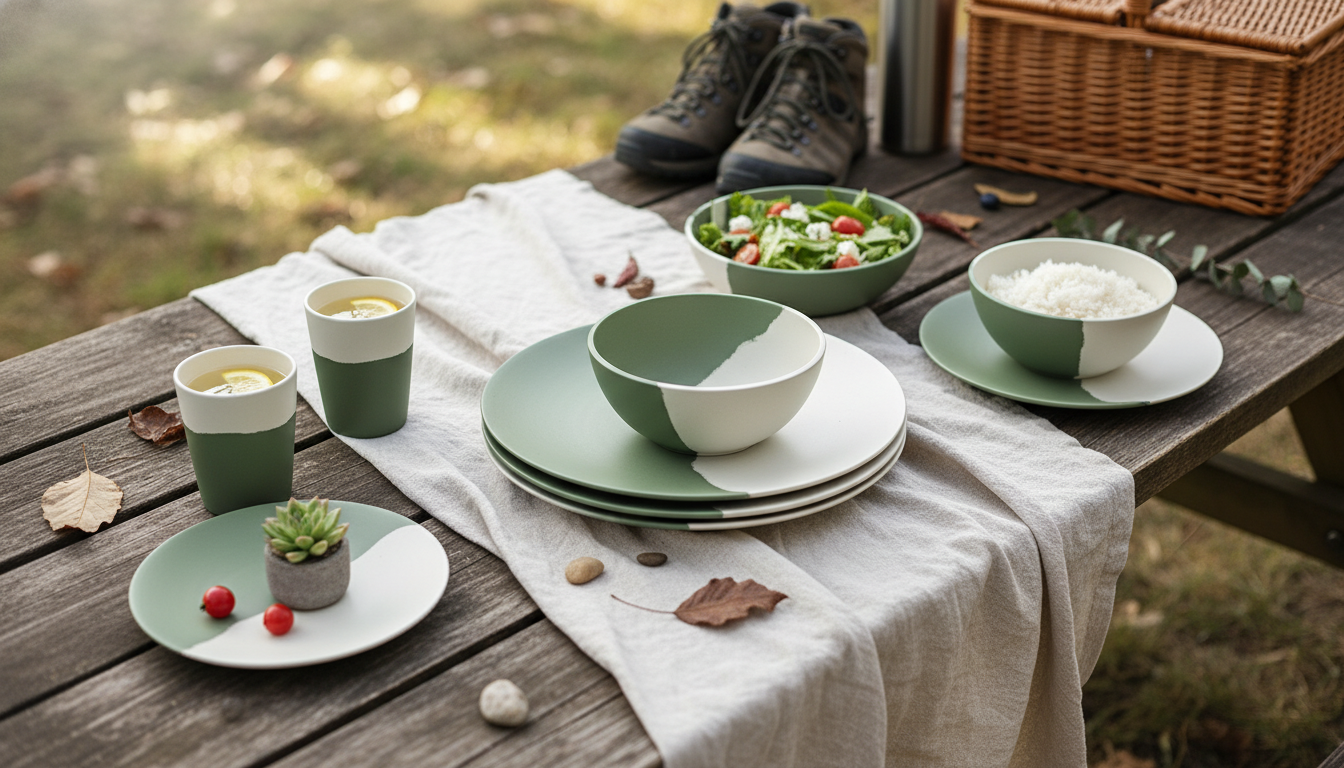
A bamboo fiber dinnerware set offers a lighter, more travel-friendly alternative to heavy ceramic while helping reduce reliance on single-use plates. This guide covers what bamboo fiber dinnerware is, how it performs at the table, how to care for it, and what to check before buying so it fits daily meals, family dinners, and outdoor get-togethers.
Choosing reusables is also a practical “reduce and reuse” step that aligns with everyday waste-cutting habits outlined by the U.S. Environmental Protection Agency (EPA).
Bamboo fiber dinnerware is typically made from plant-based bamboo fiber blended into a durable composite that can be molded into reusable plates, bowls, and cups. It’s popular for casual dining because it’s easy to handle, relatively light, and often less stressful around kids than breakable dishware.
Because these products are intended for food contact, it’s smart to look for clear “food safe” labeling and reputable guidance on food-contact materials. For background on how food-contact substances are regulated, see the U.S. Food & Drug Administration (FDA) — Food Contact Substances resource.
For many kitchens, the biggest win is convenience without disposables. Bamboo fiber composite dinnerware tends to feel easy and unfussy—simple to carry, quick to set out, and less “precious” than formal ceramics.
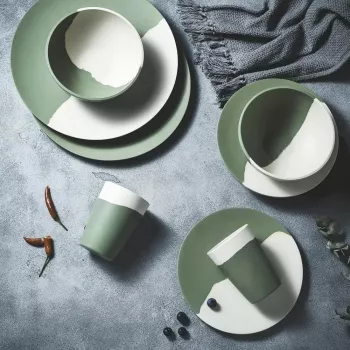
If you’re building a practical everyday setup, start with the Eco-Friendly Bamboo Fiber Dinnerware Set as the base, then add durable utensils for a consistent, ready-to-go table.
Not all bamboo fiber composites are identical. Before committing, double-check care limits so the set matches the way your household actually eats (and cleans).
A good rule: if your routine involves frequent microwave reheating, plan to reheat in glass or ceramic and then plate in bamboo fiber for serving.
Each dinnerware material has a “best lane.” Bamboo fiber composites shine when portability and everyday ease matter more than high-heat performance.
| Material | Best For | Main Trade-Offs | Typical Care Notes |
|---|---|---|---|
| Bamboo fiber composite | Everyday casual meals, outdoor dining, kids | Heat limits vary; can stain if left with sauces | Handwash or top-rack if allowed; avoid microwaves unless labeled safe |
| Ceramic/porcelain | Hot foods, microwave/oven use (when rated), classic table settings | Breakable; heavier for travel | Often dishwasher/microwave-safe; avoid thermal shock |
| Melamine | Picnics, patios, high drop resistance | Not microwave-safe; can degrade with high heat | Usually dishwasher-safe; avoid microwaving and high-heat serving |
| Glass | Neutral taste, high stain resistance | Heavier; breakable | Often dishwasher/microwave-safe depending on product |
A little routine care keeps bamboo fiber dinnerware looking fresh, especially if you serve tomato-based sauces, curry, or oily marinades.
For picnic-friendly food prep, pair your dinnerware with the Stainless Steel Fruit Prep Tool Set – Corer, Scoop & Carving Knife to make quick fruit trays, kid snacks, and salad add-ins without a big kitchen cleanup.
It depends on the specific product and its care label. If dishwasher use is allowed, top-rack placement and gentler cycles typically help, while handwashing can extend the finish and lifespan. Avoid harsh detergents and high-heat drying when not recommended.
Check the manufacturer guidance, since many bamboo fiber composites are not microwave-safe due to heat limits and binder materials. A practical workaround is reheating in microwave-safe glass or ceramic, then transferring food to the bamboo fiber plate for serving.
Some finishes can stain or retain odors if strongly pigmented sauces or oils sit too long. Prompt rinsing, mild soap, and non-abrasive sponges help, and thorough drying reduces the chance of lingering smells.







Leave a comment