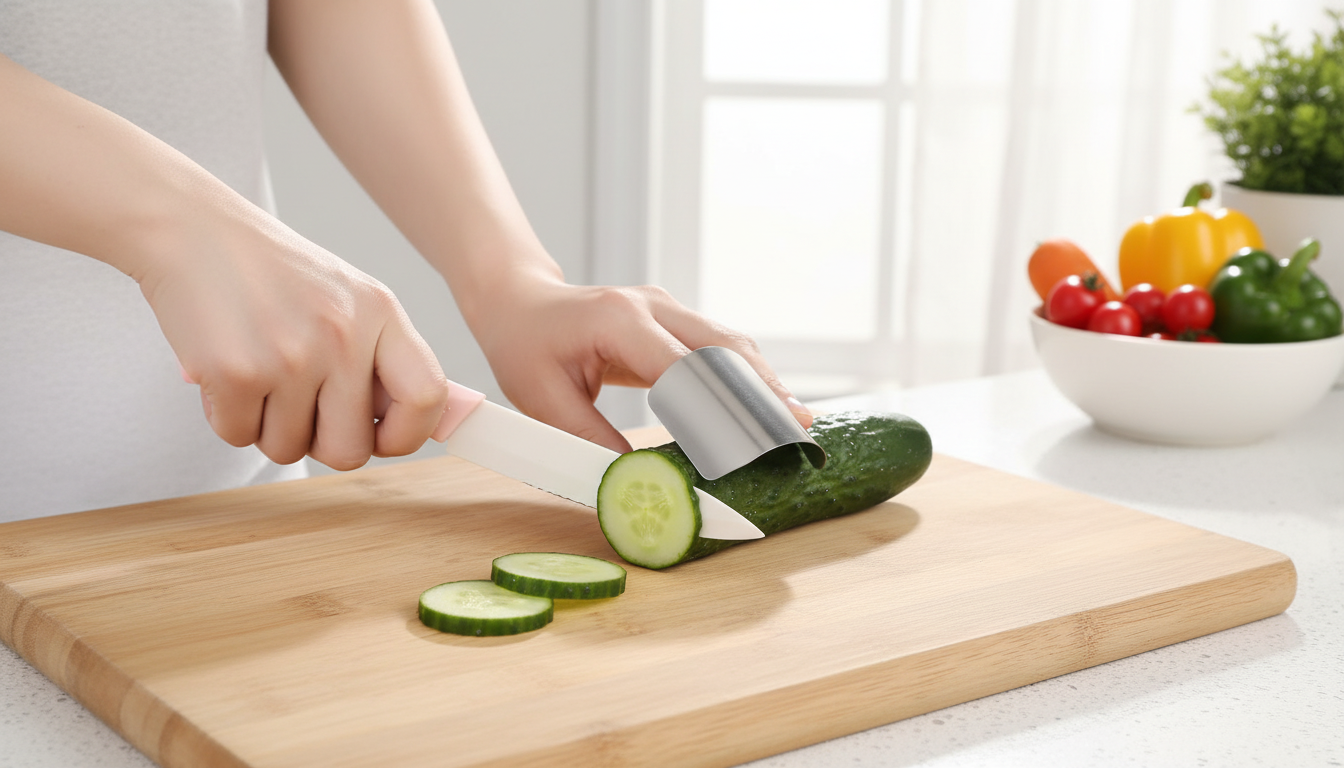
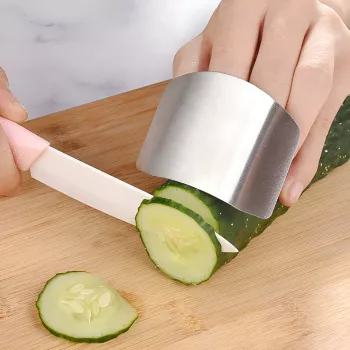
A small cutting aid can make daily prep faster and far less stressful. An adjustable stainless steel finger guard helps keep fingertips out of a blade’s path while still allowing steady control over vegetables, herbs, and fruit—especially when slicing quickly, working with slippery produce, or teaching safe knife skills. It’s a simple tool, but when used correctly it can reinforce better hand positioning and reduce those close calls that happen during busy weeknight cooking.
If you want an easy way to add a physical barrier between your guiding hand and the knife, the Adjustable Stainless Steel Finger Guard for Safe Vegetable Cutting is a compact option that stores neatly with other small utensils.
A finger guard is best viewed as a backup layer. It reduces exposure if fingers drift forward, but it won’t prevent every accident—especially if a cutting board slides, the knife slips, or the guiding hand is positioned incorrectly.
Fit is the deciding factor. A guard that rotates while you work can create distraction, while one that pinches will be removed mid-prep. Aim for stable, comfortable contact so the shield naturally stays between you and the blade.
For best results, pair the guard with a stable cutting board (a damp towel under the board helps keep it from shifting) and a sharp knife. Dull blades require extra force, which increases the chance of sudden slips—something basic food safety guidance also emphasizes. See the USDA Food Safety and Inspection Service kitchen safety resources and the CDC food safety basics for additional kitchen safety practices.
It’s also a practical tool for shared kitchens: when multiple people cook at different skill levels, a finger guard can offer consistency and peace of mind without changing the knife you already own.
| Tool | Best for | Pros | Trade-offs |
|---|---|---|---|
| Adjustable finger guard | Knife slicing and chopping | Keeps fingertips behind a rigid shield; lightweight; fast to put on | Protects a focused area rather than the whole hand; still requires attention to technique |
| Cut-resistant glove | Grating, mandoline work, rough chopping | Full-hand coverage; good backup for slips | Can reduce dexterity; may feel warm or damp during long prep |
| Mandoline food holder | Mandoline slicing | Secures food and distances fingers | Not designed for freehand knife work |
To build an efficient setup around safer cutting, consider pairing the guard with tools that reduce awkward hand positions. The Stainless Steel Fruit Prep Tool Set – Corer, Scoop & Carving Knife can take pressure off delicate fruit work, while the 24-Piece High-End Stainless Steel Cutlery Set for 6 – Luxury Flatware Kit helps keep everyday dining consistent and durable. For quick ingredient access, the Refrigerator Egg Storage Box is a simple add-on that reduces rummaging during prep.
Most adjustable designs work for both hands because the shield can be rotated to sit where your guiding fingertips need coverage. Comfort depends on getting a snug fit and positioning the shield so it naturally stays between your fingers and the blade.
Stainless steel is highly rust-resistant, but it should be rinsed and dried after washing. Avoid leaving it soaking for long periods, and clean off onion or garlic residue promptly so it doesn’t cling to the surface.
Yes—finger guards are compatible with common kitchen knives, including chef’s knives and santokus. The feel may change based on blade height and your cutting motion, so adjust the guard so your fingertips remain behind the shield throughout the cut.










Leave a comment