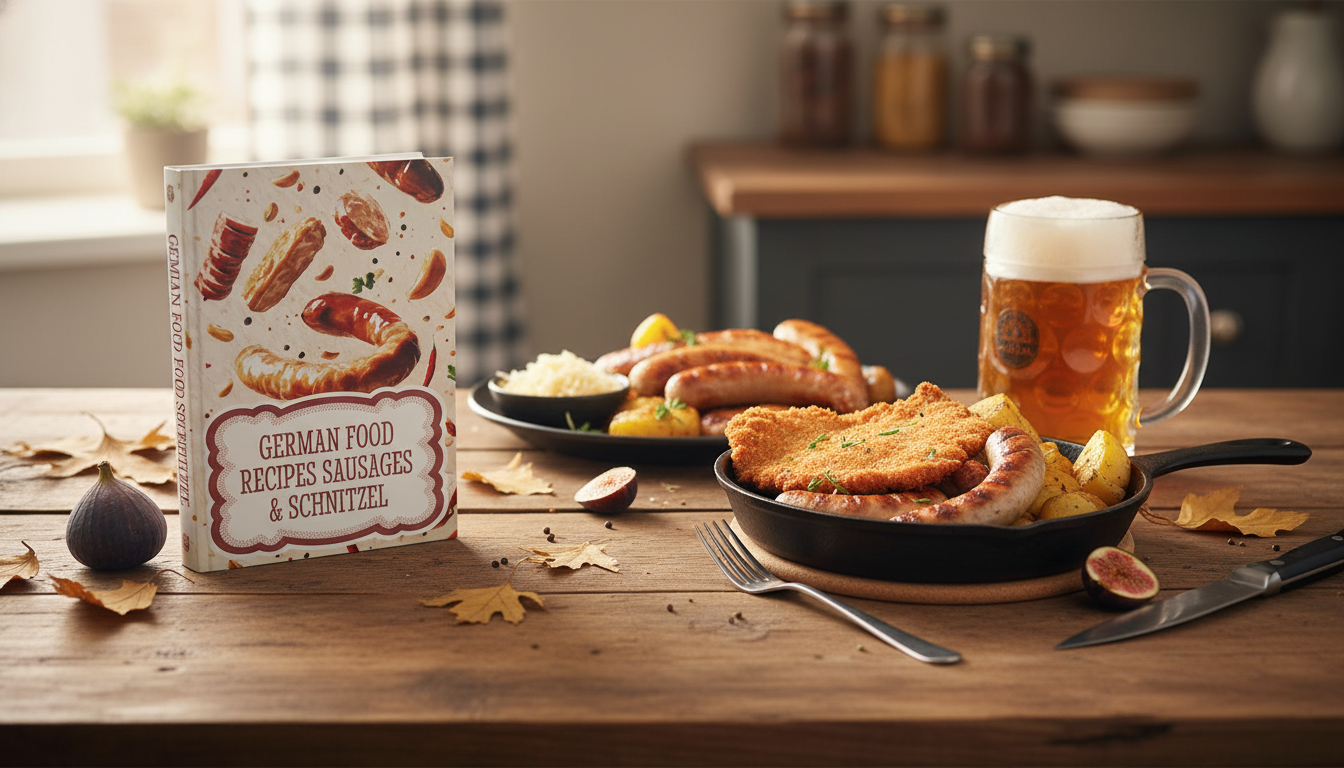
Crisp schnitzel, juicy bratwurst, tangy sauerkraut, and warm pretzels can be recreated at home with a few dependable techniques and the right lineup of classic sides. This guide breaks down the essentials—how to get schnitzel shatter-crisp, how to cook different sausages without splitting, and how to build a comforting German menu for a weekend dinner or an Oktoberfest-style gathering.
German comfort food hits a sweet spot because it’s built on smart contrasts and a simple, repeatable plate formula. You’ll often see rich, savory meats paired with acidity—think pickles, mustard, sauerkraut, or vinegar-dressed salads—plus mellow starches like potatoes, bread rolls, or spaetzle. That balance keeps the meal hearty without feeling heavy.
Texture does a lot of the work, too: crackly schnitzel breading, a snappy sausage casing, creamy potato sides, and crunchy cabbage or cucumber salads all show up in the same meal. Seasoning tends to be straightforward but intentional: salt and pepper, marjoram, caraway, nutmeg, mustard, and fresh herbs. The structure is also practical for home cooks: one hearty main, one warm side, one tangy side, and a sauce or mustard on the table.
The core of great schnitzel is thin meat, dry surface, light breading, and hot fat. Pork loin is common in home kitchens, veal is the classic for Wiener Schnitzel, and chicken works well when you want something lighter while keeping the same technique.
Pound cutlets between sheets of parchment or plastic wrap until they’re evenly thin. Uniform thickness prevents dry, overcooked edges and avoids the “raw middle” problem. Aim for a cutlet that’s thin enough to cook quickly but not shredded—gentle, even pressure beats aggressive smashing.
Lightly season the meat, then season the flour and breadcrumbs as well. This keeps the finished crust flavorful instead of relying entirely on a squeeze of lemon or a sauce at the end.
Use the classic setup: flour → beaten egg → fine breadcrumbs. Pat the cutlet dry first, then coat fully in flour (this helps the egg cling). Press breadcrumbs gently so they adhere without forming a thick blanket that turns heavy.
Oil should sizzle immediately when the cutlet hits the pan. If the pan cools down from overcrowding, the breading absorbs oil and turns greasy. Fry in batches, then let oil recover to temperature before the next round. Drain briefly on a wire rack so steam doesn’t soften the crust.
Serve schnitzel with lemon wedges and keep sauces on the side (mushroom cream, mustard-forward sauce, or a paprika-style pepper sauce). This preserves crispness while still giving guests options.
| Style | Typical Protein | Signature Finish | Pairs Well With |
|---|---|---|---|
| Wiener Schnitzel | Veal | Lemon, sometimes capers | Potato salad, cucumber salad |
| Schnitzel Wiener Art | Pork | Lemon, parsley | Fries or pan potatoes, pickles |
| Jägerschnitzel | Pork | Mushroom sauce | Spaetzle, braised red cabbage |
| Zigeunerschnitzel (Paprika-style sauce) | Pork | Pepper-onion-tomato sauce | Rice or fries, cabbage salad |
The biggest sausage mistake is starting too hot. High heat right away can split casings, leak juices, and leave you with dry sausage and a greasy pan. A gentler start, followed by browning, keeps texture juicy and casing intact.
Cook over medium heat, turning often for even browning. Serve with mustard and a roll, or alongside potatoes and sauerkraut. For food safety, follow the USDA’s minimum internal temperature guidance for meat and poultry (USDA Food Safety and Inspection Service chart).
Set up a condiment station with sweet mustard, sharp mustard, horseradish, pickles, and lemon wedges so guests can customize. For timing, cook make-ahead sides first and hold them warm; fry schnitzel last so it stays crisp. Oktoberfest began as a public festival in Munich and has grown into a worldwide tradition (Encyclopaedia Britannica: Oktoberfest), but the most authentic part at home is the convivial, shareable table.
A focused collection makes it easier to rotate weeknight favorites (bratwurst plates, quick cabbage sides) and plan special-occasion meals (schnitzel with classic sauces and pairings) without reinventing the wheel each time. For a compact reference centered on sausages and schnitzel with traditional sides, explore German Food Recipes Sausages & Schnitzel | Authentic German Cuisine eBook.
For hosting, a polished table setup helps the spread feel intentional—especially when serving multiple mustards and shared sides. Consider the 24-Piece High-End Stainless Steel Cutlery Set for 6 – Luxury Flatware Kit for a cohesive look. And if your menu includes apple-forward sides or dessert, the Stainless Steel Fruit Prep Tool Set – Corer, Scoop & Carving Knife can speed up prep without fuss.
Drain schnitzel on a wire rack instead of paper towels, don’t cover it, and hold it briefly in a low oven so steam can escape rather than soften the crust.
For fresh bratwurst, a gentle simmer first helps it cook through evenly and reduces the chance of splitting. Finish with grilling or searing for browning and deeper flavor.
Combine one warm starch (potatoes or spaetzle), one tangy side (sauerkraut or cucumber salad), and bread (pretzels or rolls), then round it out with mustards, pickles, and lemon wedges.









Leave a comment