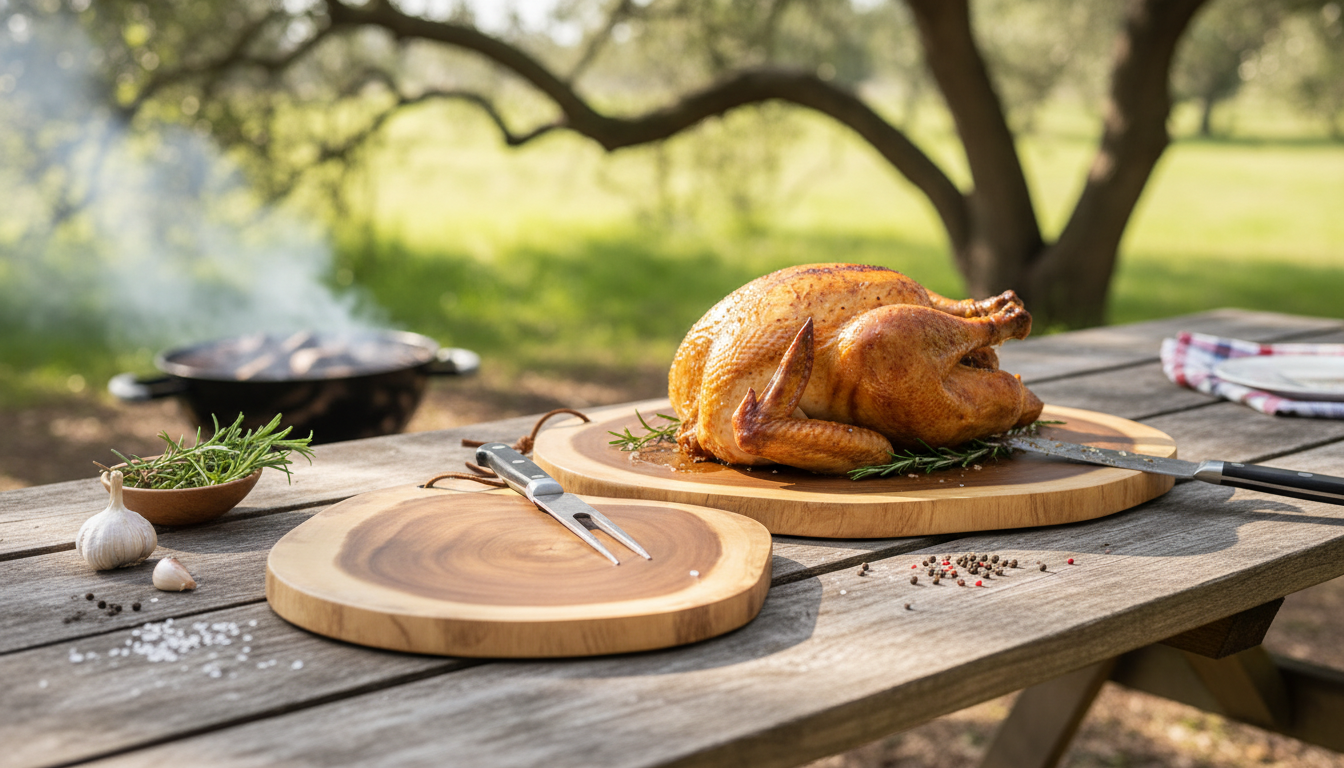
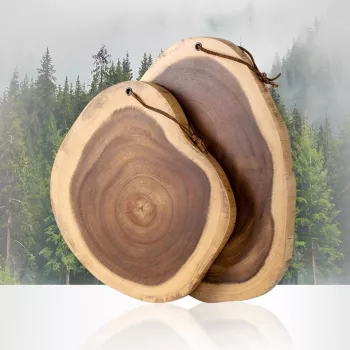
A round acacia butcher block is built for the messy, satisfying moments: slicing brisket, resting ribs, and carving a holiday turkey without juices running onto the counter. The right wood, the right thickness, and an easy care routine make the difference between a board that stays smooth for years and one that turns rough, stained, or warped. Below is what acacia does well for meat prep, why round boards feel so natural for carving, and how to keep the surface food-safe and knife-friendly.
Acacia is a dense hardwood with a solid, “anchored” feel that helps a cutting board stay put during slicing and carving. That stability matters most when you’re applying pressure—separating joints on turkey, portioning ribs, or making long brisket strokes—because a board that shifts is a board that invites uneven cuts.
If you want a board designed for BBQ nights and holiday carving sessions, start with a purpose-built option like the Acacia Wood Cutting Board for Meat, BBQ & Turkey Carving – Round Butcher Block.
Round boards shine when the food you’re cutting needs repositioning. A turkey doesn’t carve neatly if you keep your hands locked to one angle; you follow joints, breastbone contours, and the direction of the grain. A circular surface lets you rotate the board instead of twisting your wrists or dragging a heavy bird across corners.
| Food | What the board helps with | Tip for cleaner results |
|---|---|---|
| Turkey (whole) | Stable carving surface; easy rotation | Rest bird first, then rotate the board to follow joints and breast slices |
| Brisket | Long, even slicing without rocking | Slice against the grain; rotate board so the knife stroke stays straight |
| Ribs | Chopping and portioning with contained juices | Flip rack meat-side down to cut between bones cleanly |
| Steaks & chops | Resting and slicing for serving | Let juices settle, then slice and keep the board slightly angled if needed |
| BBQ sides (bread, herbs) | Quick prep while the grill runs | Keep a separate board for raw meat to reduce cross-contamination |
A quality board works best when it’s set up like a workstation. A few small habits can dramatically reduce sliding, pooling juices, and “shredded” slices.
For a coordinated table setup, pair your carving and serving with the 24-Piece High-End Stainless Steel Cutlery Set for 6 – Luxury Flatware Kit so the platter-to-plate moment feels as polished as the cook.
For general kitchen safety principles—clean, separate, cook, and chill—use the USDA’s guidance here: USDA Food Safety and Inspection Service (Kitchen Companion). If turkey is on the menu, the USDA’s carve-and-cook basics are also helpful: USDA FSIS — Cooking Turkey Safely.
| When | What to do | Why it matters |
|---|---|---|
| After each use | Hand-wash, rinse, towel-dry, air-dry upright | Reduces moisture retention and odors |
| Weekly (heavy use) | Light mineral oil coat | Maintains a smooth surface and slows staining |
| Monthly (typical use) | Oil + optional balm | Improves water resistance and feel |
| As needed | Spot-sand rough areas, then re-oil | Restores knife-friendly smoothness |
To keep cross-contamination routines simple, consider dedicating one tool set to produce and garnish prep—like the Stainless Steel Fruit Prep Tool Set – Corer, Scoop & Carving Knife—while your round butcher block stays focused on BBQ and carving.
Yes—when it’s cleaned promptly with mild soap and warm water, then dried fully upright with airflow on both sides. To reduce risk further, keep raw-meat prep separate from ready-to-eat foods or use separate boards.
Oil it whenever it looks dry or dull, feels rough, or absorbs water instead of beading. A practical cadence is weekly for heavy use and about monthly for average use, using food-grade mineral oil (not cooking oils that can turn rancid).
Yes—round boards work especially well for slicing and presenting brisket, ribs, and smoked meats as a centerpiece. For best food safety, serve on a freshly washed and fully dried board, or keep a separate board strictly for serving.










Leave a comment