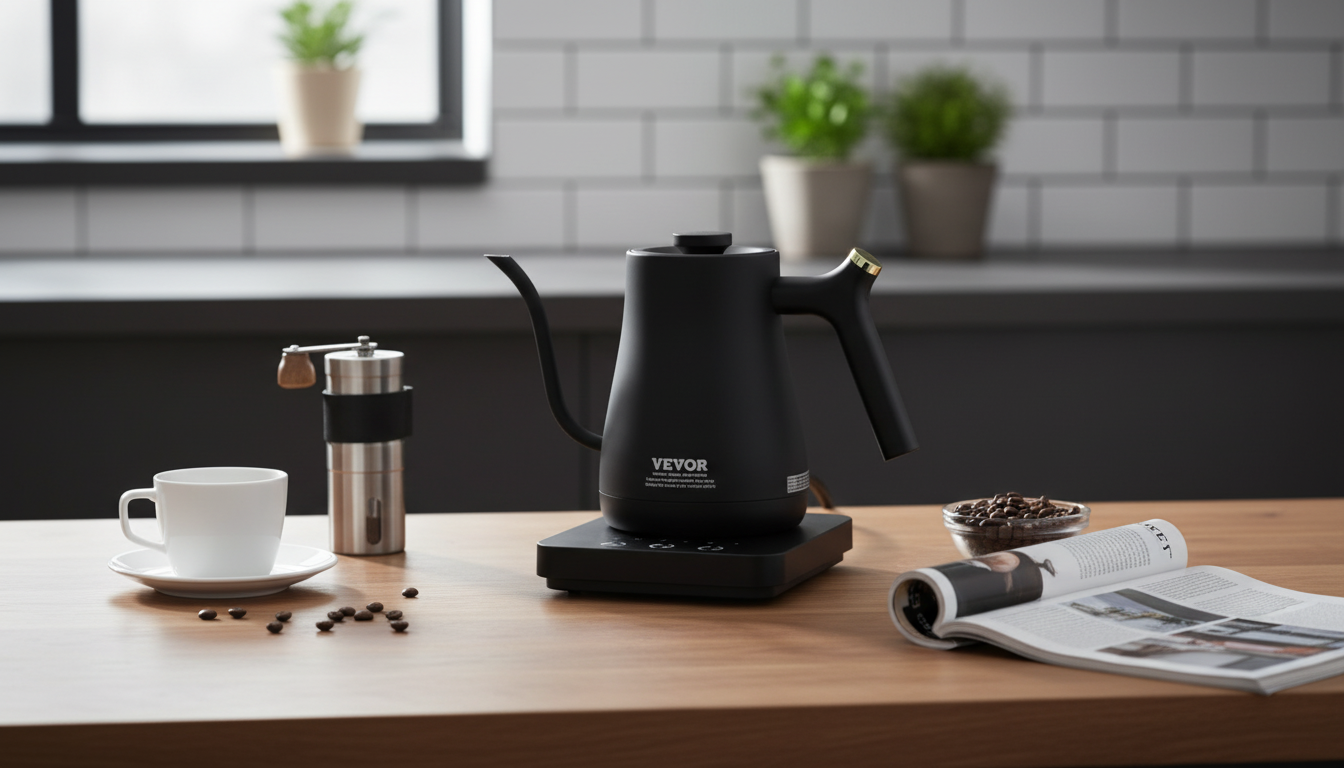
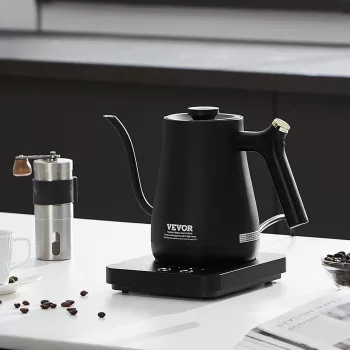
A fast-heating electric gooseneck kettle can simplify daily coffee and tea by combining quick boil times with a steady, controlled stream. This 1L, 1200W option is designed for precise pour-over brewing, comfortable handling, and everyday countertop convenience. Whether you’re dialing in a V60-style recipe or topping off a small teapot without splashing, a well-shaped gooseneck spout makes the process feel calmer and more repeatable.
The defining feature is the spout: long, narrow, and curved to encourage a slow, accurate pour. That shape supports even saturation in pour-over coffee, where where the water lands—and how quickly it arrives—can influence extraction.
More control over flow rate helps reduce channeling (when water finds a “path of least resistance” through the coffee bed) and can make results more consistent from cup to cup. The same control is helpful for tea, especially when filling smaller steeping vessels like gaiwans or compact teapots, where a sudden surge can cause splashing or overfilling.
This kettle’s 1L capacity fits many daily routines: single mugs, shared brews, or multiple tea steeps. The 1200W heating power is designed for quicker warm-up compared with many lower-wattage options, which is especially noticeable on busy mornings or when you’re preparing multiple pours.
Because it’s electric, it also reduces the need for stovetop monitoring. You can prep your coffee dose, rinse your filter, or set up tea leaves while the water heats—keeping the routine simple and contained to one corner of the counter.
| Detail | What it means in daily use |
|---|---|
| Capacity: 1L | Enough for multiple cups; helps avoid frequent refills for tea sessions |
| Power: 1200W | Faster heat-up for coffee/tea prep compared with many lower-power kettles |
| Gooseneck spout | Supports controlled pouring for pour-over and cleaner fills |
| Primary uses | Pour-over coffee, tea, hot water for instant drinks and recipes |
A 1200W kettle is built to cut down the “dead time” between deciding you want coffee or tea and actually starting the brew. Heating water from room temperature to a usable brewing range tends to feel noticeably quicker when the kettle has adequate power and is kept reasonably clean inside.
For pour-over coffee, faster heating can also help maintain momentum during multi-pour recipes. If your method includes a bloom followed by several pulses, you can focus on timing and pouring rather than waiting for water to return to temperature.
Tea drinkers benefit, too—especially when doing multiple infusions across the day. Reheating water becomes a smaller interruption, which makes it easier to stick with shorter, more precise steep times.
A gooseneck spout encourages a gentler, more deliberate pour that’s easier to aim. That matters because pour-over brewing often rewards even wetting: a controlled spiral pour helps saturate grounds across the entire coffee bed rather than carving a single channel down the center.
It also supports small, precise top-ups during pulse pouring. Keeping the slurry height stable can lead to more predictable drawdown and fewer surprises in flavor. And for smaller drippers or single-cup brewers, a controlled stream reduces the chance of sudden surges that can disturb the bed or overflow the filter.
Even a great kettle shines most when the basics are solid. Start with fresh coffee and a consistent grind size matched to your dripper. If the grind is too fine, the drawdown can stall; too coarse, and the cup can taste thin or under-extracted.
Before brewing, rinse your filter to reduce papery flavors and preheat the dripper and carafe. Then bloom: pour a small amount of hot water over the grounds, making sure everything gets wet, and let it sit briefly before continuing with the main pours.
During the brew, prioritize even coverage. A steady flow rate with gentle circles often works better than dumping water in one spot. Keeping a simple log—coffee dose, water amount, and total time—makes it easier to repeat the cups you like and adjust the ones you don’t. For broader technique references and standards, the Specialty Coffee Association’s brewing resources are a helpful starting point.
After use, allow the kettle to cool before wiping it down or storing it. For general hot-liquid safety guidance, the U.S. Consumer Product Safety Commission’s scald burn prevention tips are worth reviewing—particularly in busy kitchens or homes with children.
Yes—its narrow spout helps you control flow rate and aim water precisely, which improves even saturation and helps reduce channeling. That typically leads to more consistent extraction and repeatable results across brews.
In many kitchens, it’s often in the range of several minutes, but timing varies with starting water temperature, room conditions, and mineral scale inside the kettle. Keeping the kettle descaled and starting with warmer tap water can reduce heat-up time.
Yes, it works well for both coffee and tea. For the cleanest flavor, rinse regularly, descale as needed, and use fresh water so lingering odors or mineral buildup don’t affect taste.








Leave a comment