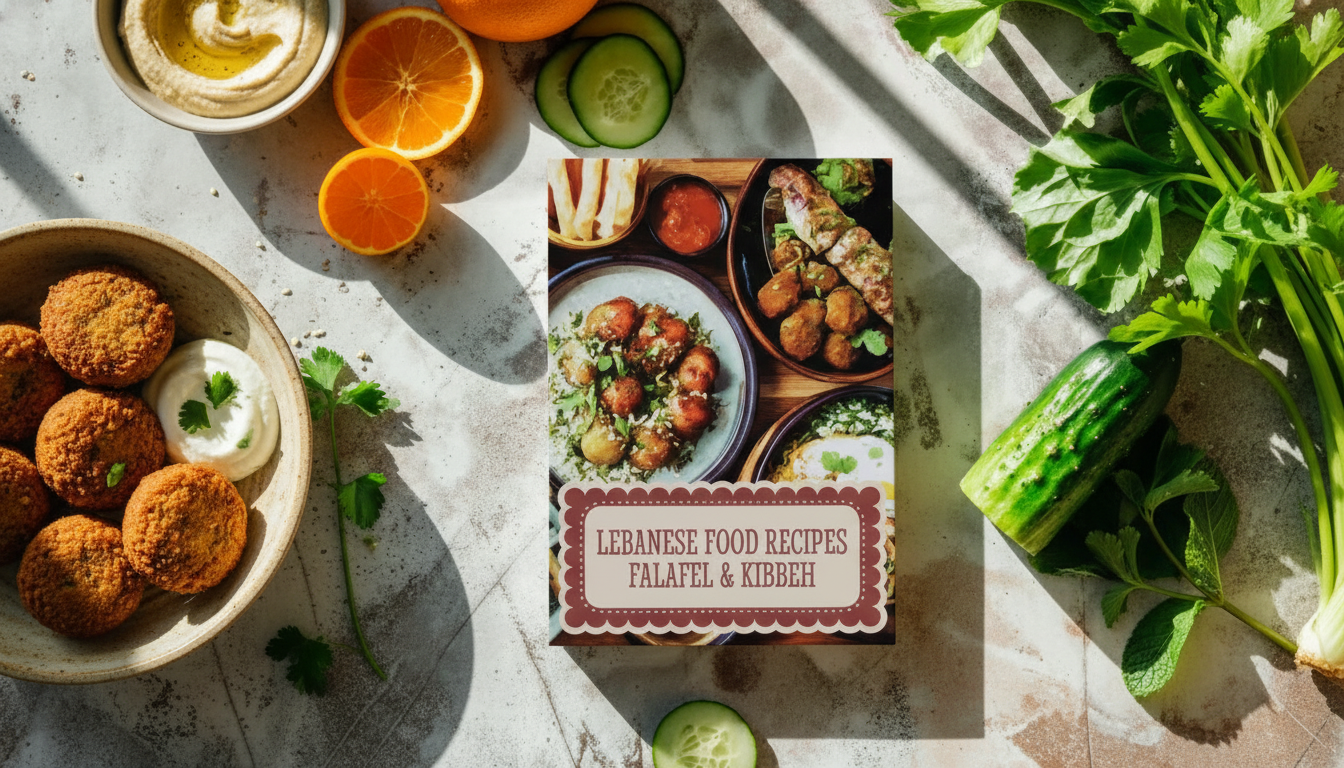
Lebanese cooking balances bright herbs, warm spices, and satisfying textures—from crisp falafel to tender kibbeh and a full mezze spread meant for sharing. This digital cookbook focuses on dependable techniques, classic flavor pairings, and smart prep so favorite dishes can fit both weeknights and gatherings.
Lebanese food often starts with mezze: a table of small plates that builds a complete meal through contrast. Think crunchy next to creamy, tangy next to rich, and fresh herbs alongside warm spices.
If the goal is to make Lebanese classics feel practical, a focused guide can help more than a huge, scattered cookbook. The Lebanese Food Recipes Falafel & Kibbeh eBook (digital download) centers on falafel, kibbeh, and the mezze essentials that make them easy to serve as complete plates.
| Main | Best With | Make-Ahead Tip |
|---|---|---|
| Falafel | Tahini sauce, chopped salad, pickles, warm pita | Shape patties/balls and refrigerate before frying or baking |
| Kibbeh | Yogurt sauce, cucumber-tomato salad, lemon wedges | Prep filling and shell mixture separately, assemble when ready |
| Mezze plates | Hummus, baba ghanoush, olives, stuffed grape leaves | Make dips a day ahead; flavors deepen overnight |
Falafel is deceptively simple: chickpeas, herbs, aromatics, and spices—yet small choices change the texture dramatically. For the classic “green” interior and light bite, dried chickpeas soaked until fully hydrated usually outperform canned.
For consistent browning and less mess, keep a simple station: shaped falafel on a tray, a lined plate for draining, and a warm oven on low to hold batches. If you’re assembling fruit-forward sides (like a citrus salad or pomegranate garnish), the Stainless Steel Fruit Prep Tool Set – Corer, Scoop & Carving Knife can streamline prep without digging through drawers.
Kibbeh is all about a tender, well-seasoned interior wrapped in a cohesive shell. The signature texture comes from fine bulgur combined with meat (commonly lamb or beef) and warm spices. Once the base is right, the format can match your schedule.
When kibbeh is part of a shared mezze table, serving pieces matter. A set that feels substantial can elevate even a casual spread, like the 24-Piece High-End Stainless Steel Cutlery Set for 6 for weeknight dinners that still look pulled-together.
A mezze table doesn’t need dozens of plates. The simplest version is built from a reliable formula: hot + cool + creamy + fresh + briny, with bread to tie it together.
If you like to check nutrition basics or compare ingredients, USDA FoodData Central is a helpful reference. And for kitchen best practices—especially when prepping meat for kibbeh—review MedlinePlus food safety guidance.
Yes—baking or air-frying works well, but the crust is usually a bit drier and less shatter-crisp than deep-frying. Lightly oil the exterior and turn halfway through to encourage even browning.
Tray-baked kibbeh or simple patties are typically the least time-intensive because they reduce shaping. Pair with yogurt sauce, a cucumber-tomato salad, and lemon wedges, and prep the filling and shell mixture ahead so you only assemble and bake before serving.
A practical formula is: one hot item + one dip + one salad + pickles/olives + bread. For example, serve falafel with tahini and chopped salad, or baked kibbeh with yogurt sauce, cucumbers and tomatoes, and warm pita.









Leave a comment