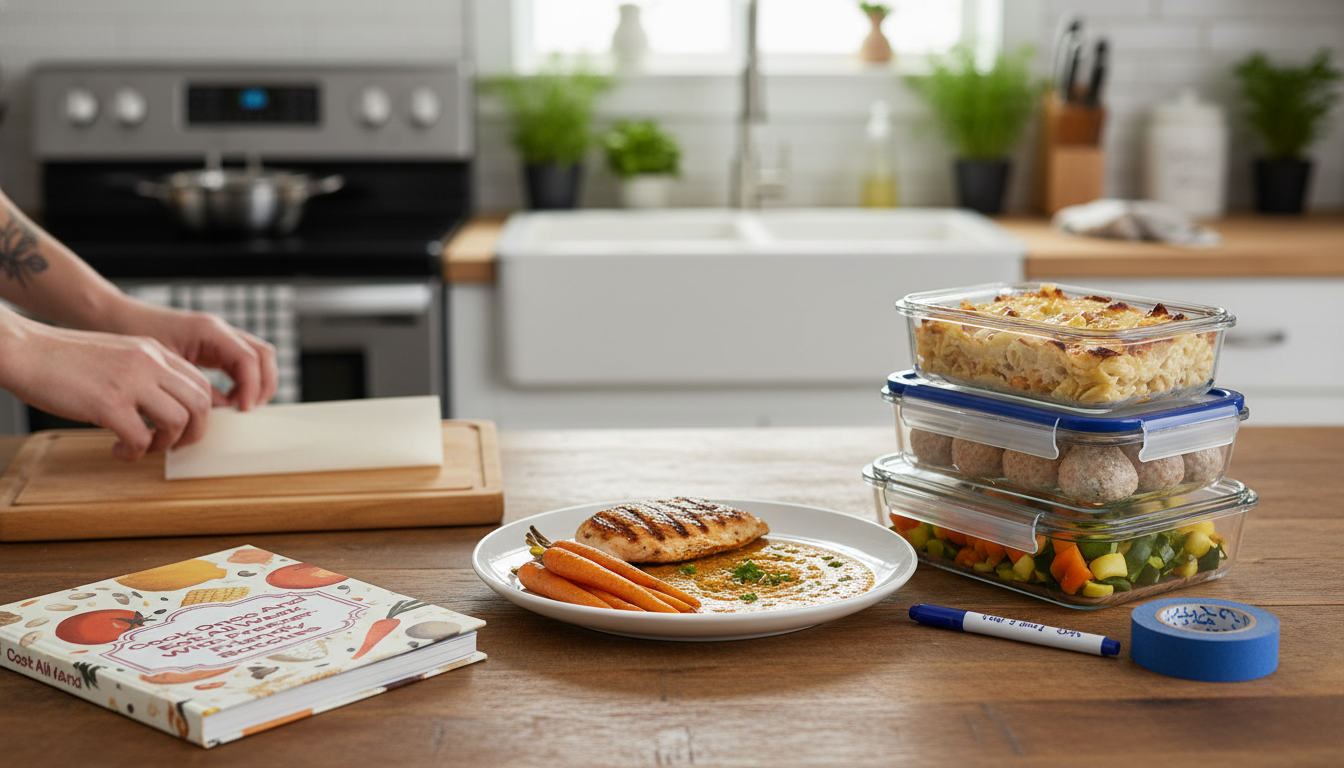
Long weekdays get easier when dinners are already handled. Freezer-friendly batch cooking turns one focused prep session into multiple mix-and-match meals—without repeating the same dish every night. The goal is simple: plan a small set of recipes, cook in smart batches, freeze in family-friendly portions, and reheat safely for fast weeknight wins.
Batch cooking works because it moves the hardest part of dinner—deciding and starting—into one predictable block of time. When a meal is already cooked and labeled, weeknights turn into “heat and serve” instead of “start from scratch.”
Where meal prep often falls apart is in the details. Common pitfalls include freezing foods that don’t recover well (watery vegetables, delicate dairy-based sauces), skipping labels (mystery containers multiply fast), and portioning too large to thaw quickly—turning “easy dinner” into a long, uneven reheat.
Instead of cooking seven separate dinners, pick a small set of base recipes that share ingredients. Think onion, garlic, carrots, ground meat or beans, and a couple of starches like rice or pasta. Then build variety by changing the format:
After cooking, split everything into three lanes: (1) eat-now portions, (2) fridge portions for the next 48 hours, and (3) freezer portions for later in the week—or next week when you’re even busier.
| Step | What to do | Time saver | Freezer tip |
|---|---|---|---|
| Plan | Choose 3–5 recipes with overlapping ingredients | One shopping list, fewer store trips | Prefer recipes that reheat well (soups, chilis, sauces, casseroles) |
| Prep | Chop aromatics/veg, measure spices, rinse grains | Assembly becomes quick and clean | Freeze chopped onions/peppers flat in bags for later |
| Cook | Use oven + stovetop at the same time | Parallel cooking cuts total time | Undercook pasta/rice slightly for better reheating |
| Portion | Divide into family and single-serve containers | No extra work on busy nights | Freeze in thin layers for faster thawing |
| Label | Add dish name + date + reheating notes | No guesswork at 5 p.m. | Use “use by” windows and rotate oldest forward |
The easiest freezer wins are foods that stay moist and flavorful after reheating. Build your week around “bases” that can change shape on the plate (over rice one night, tucked into tortillas the next).
To keep prep streamlined, use tools that speed up repeated tasks. A small fruit-prep kit makes quick work of lunchbox add-ons and snack bins—see the Stainless Steel Fruit Prep Tool Set – Corer, Scoop & Carving Knife for faster apple slices, melon scoops, and weekday-ready fruit.
Breakfast batchers: if you’re prepping egg muffins or breakfast burritos, keeping eggs organized in the fridge helps you move faster at the start. The Refrigerator Egg Storage Box makes it easier to see what you have before prep day.
For quick reference on storage times, the FDA refrigerator & freezer storage chart is a helpful benchmark, and the CDC food safety basics cover safe handling habits that matter most on busy weeks.
If you want a ready-made plan built for busy schedules, Cook Once and Eat All Week with Freezer-Friendly Batches (meal prep eBook) pulls together recipe ideas, freezer notes, and a family-friendly rhythm: one cooking block, multiple dinners, and dependable backups for hectic nights.
For best taste and texture, many batch-cooked meals are at their peak within about 2–3 months, though they can remain safe longer if kept consistently frozen. Label each container with the date and rotate older meals to the front so they get used first.
Watery vegetables (like cucumbers and some lettuces), mayo-based salads, cream sauces that tend to split, and raw potatoes often thaw with unpleasant texture. A workaround is to freeze the base (chili, stew, tomato sauce) and add fresh toppings, dairy, or crunchy vegetables after reheating.
A mix usually works best: family portions for planned dinners and single portions for backup lunches or nights when schedules don’t match. Smaller portions thaw faster and reduce waste, while larger portions make it easy to feed everyone at once.










Leave a comment