Korean BBQ and kimchi share the same magic: bold seasoning, smart technique, and a balance of heat, sweetness, smoke, and tang. A great spread doesn’t require a restaurant grill or days of prep—it’s mostly about choosing the right cuts, using a few dependable sauces, and letting bright, crunchy fermented sides do what they do best: cut through richness and keep every bite feeling new.
At its best, Korean BBQ is built on contrast. Hot, sizzling meat gets sharper and more alive next to cool, acidic, lightly carbonated kimchi. That push-and-pull is the whole point: richness meets tang; smoke meets spice; caramelized edges meet crisp greens.
Texture is just as important as flavor. Think crackly sear on thin-sliced beef, the snap of lettuce or perilla wraps, and the crunchy lift of banchan. Even when two dishes share similar seasonings—garlic, sesame, scallions, gochugaru—the experience stays dynamic because each element brings a different “bite.”
Timing also plays in your favor. While kimchi rests or ferments, you can mix marinades, slice aromatics, and portion proteins so the actual cook time feels quick and social rather than stressful.
A small Korean pantry goes a long way. Keep gochugaru (Korean chili flakes) for clean heat and color, gochujang (chili paste) for sweet-spicy depth, and doenjang (soybean paste) for savory, fermented backbone. Add toasted sesame oil, rice vinegar, soy sauce, and a touch of brown sugar or honey to round edges and encourage browning.
Aromatics make everything taste “finished.” Garlic, ginger, scallions, and onion are the baseline. For classic bulgogi tenderness and sweetness, grated onion or Asian pear is a reliable shortcut that also helps thin marinades cling to meat.
For kimchi, you’ll want napa cabbage (or radish/cucumber), kosher salt, and an umami booster such as fish sauce or salted shrimp—though vegan swaps work well too. Use a non-reactive bowl (glass, stainless, or food-safe plastic) and clean jars with headspace for bubbling. Labeling dates is surprisingly helpful once you have multiple batches going.
To make prep easier for weeknight BBQ spreads, a sharp knife and kitchen shears are worth keeping within arm’s reach. If you like neat fruit garnishes, slaws, or quick pear-onion blends for marinades, the Stainless Steel Fruit Prep Tool Set – Corer, Scoop & Carving Knife can streamline the little tasks that add up.
You can get excellent results with a grill pan, cast iron skillet, or an outdoor grill. The most important “equipment” is heat control: aim for a high-heat zone to sear, and a slightly lower zone to finish thicker pieces without scorching marinades that contain sugar.
| Cut | Seasoning Style | Cook Time | Best With |
|---|---|---|---|
| Beef (thin-sliced ribeye/sirloin) | Soy-garlic-sesame + grated pear/onion | 1–2 min per side | Lettuce wraps, scallion salad, mild kimchi |
| Pork belly (samgyeopsal) | Salt + pepper, finish with sesame oil-salt dip | 2–4 min per side | Ssamjang, fresh greens, spicy kimchi |
| Chicken thighs | Gochujang + soy + garlic + ginger | 5–7 min per side | Cucumber kimchi, rice, perilla leaves |
| Mushrooms/tofu (grillable) | Doenjang + sesame oil + scallion | 2–3 min per side | Kimchi, soy-scallion sauce, pickled radish |
When packing jars, press the vegetables down so they’re submerged in brine, but leave headspace for bubbles. Start fermenting at a cool room temperature to kick-start activity, then move to the refrigerator to slow things down and build complexity over time. For food-safety best practices and fermentation guidance, the National Center for Home Food Preservation is a widely trusted reference point.
Plan leftovers on purpose: extra grilled meat becomes fried rice, ramen toppers, or crispy quesadillas with kimchi. And when you want to make the table feel special with minimal effort, the 24-Piece High-End Stainless Steel Cutlery Set for 6 – Luxury Flatware Kit helps a casual, cook-as-you-go meal look polished.
For technique refreshers and classic Korean flavors, recipe creators like Maangchi are a dependable source for traditional methods and variations.
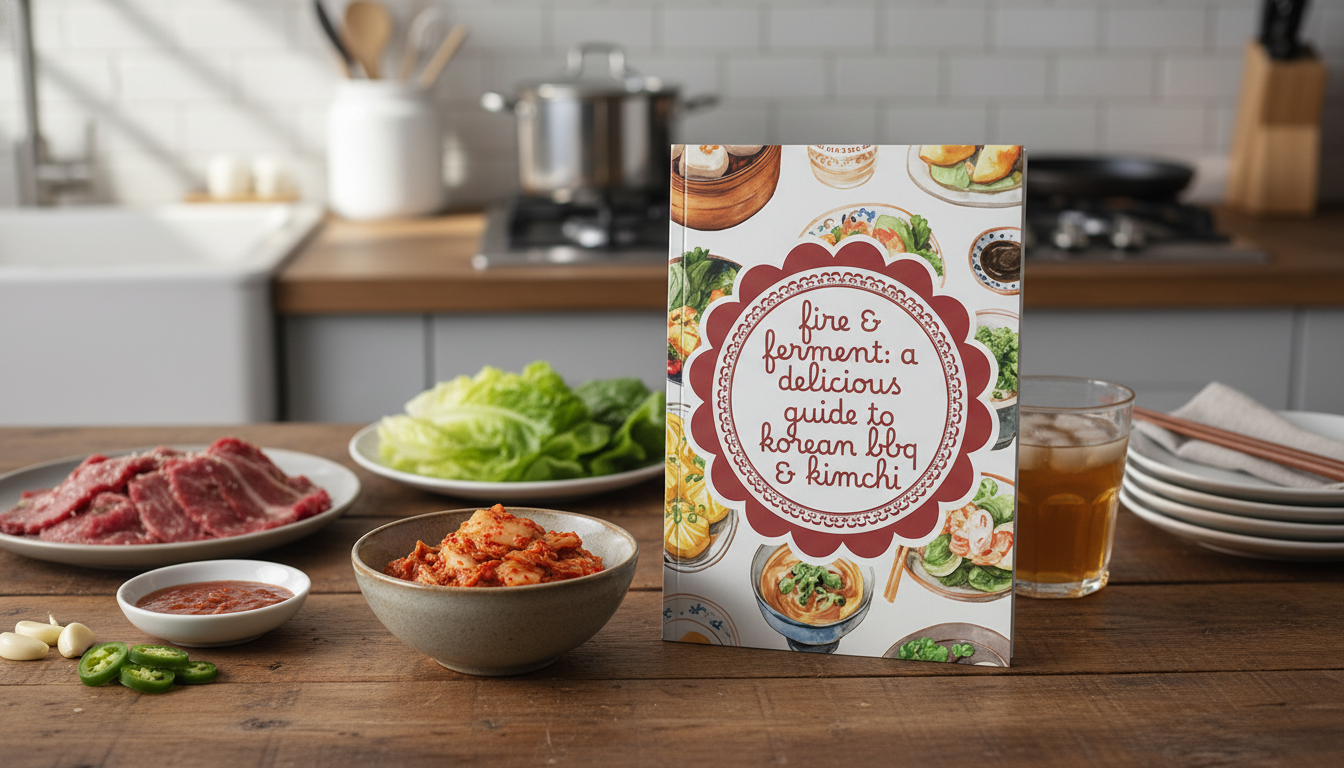
If you want a single, repeatable system—pick a protein, choose a sauce, add a kimchi or quick pickle—Fire & Ferment: A Delicious Guide to Korean BBQ & Kimchi | Korean Food Recipes BBQ & Kimchi Ebook keeps everything in one place with approachable recipes and flavor-building basics. It’s also an easy gift for anyone who loves grilling, meal prep, or fermentation projects.
At cool room temperature, kimchi often shows active bubbling and a tangier flavor in 1–3 days, depending on your kitchen and jar size. In the refrigerator, it continues to slowly age for weeks; start tasting daily after the first day or two to catch your preferred level of sourness.
Thin-sliced bulgogi-style beef or pork is the simplest: it cooks fast in a hot skillet or grill pan and browns well without needing an indoor tabletop grill. Keep batches small so the meat sears instead of steaming, and serve with quick sauces like ssamjang or soy-scallion.
Yes—kimchi can be made without fish sauce using vegan umami options like soy sauce, miso/doenjang, or kelp-based seasoning. The flavor will be a little cleaner and less “sea-savory,” but still complex once it ferments.












Leave a comment