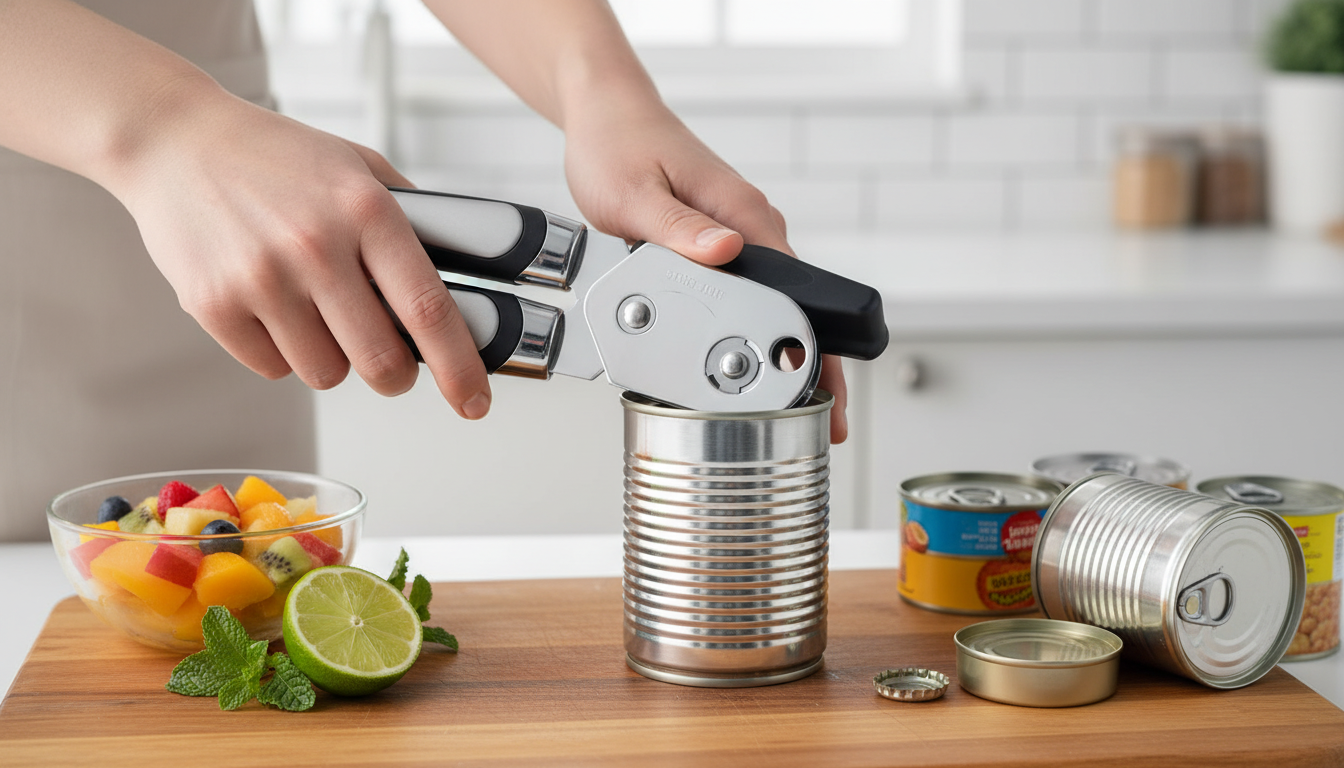
A reliable can opener should feel steady in the hand, cut cleanly, and leave a lid edge that’s safer to handle. This stainless steel 3-in-1 manual can opener is designed around an ergonomic grip and a safety side-cut mechanism that helps reduce sharp edges, making everyday meal prep smoother for home cooks, campers, and anyone who opens cans often.
Unlike many classic openers that slice down through the top edge of the lid, a safety side-cut can opener works along the can’s outer seam. The cutting wheel grips and separates the lid from the rim, helping the lid lift off with a cleaner finish when the opener is properly aligned on an undamaged can.
| Feature | Safety Side-Cut | Traditional Top-Cut |
|---|---|---|
| Where it cuts | Along the outer seam of the lid | Through the top edge of the lid |
| Typical edge feel | Smoother lid/rim | More likely to be sharp/jagged |
| Mess control | Often cleaner separation | Can leave uneven edges |
| Best for | Everyday kitchens, safer handling | Basic opening when safety edge is less important |
A kitchen tool that regularly touches moisture and food residue benefits from materials that hold up. Stainless steel components support durability and corrosion resistance, and they’re well-suited for frequent washing and drying. For anyone who opens multiple cans in a cooking session, an ergonomic handle can also make a noticeable difference by reducing hand strain during repeated turns.
| Detail | Why it matters |
|---|---|
| Stainless steel body | Resists rust and holds up to frequent washing/drying |
| Ergonomic grip | More comfortable turning force and steadier handling |
| Safety side cut | Helps reduce sharp lid edges compared with many top-cut designs |
| 3-in-1 functionality | Consolidates common kitchen tasks into one compact tool |
When a tool earns its space in a drawer, it usually does two things well: it saves time and it stays easy to use. A 3-in-1 manual can opener is especially practical in kitchens that rely on pantry staples, and it’s also a smart pick for travel when outlets and electric appliances aren’t guaranteed.
| Scenario | Benefit |
|---|---|
| Batch cooking | Less hand fatigue during repeated openings |
| Apartment kitchens | Fewer single-purpose gadgets |
| Meal kits & quick dinners | Faster pantry-to-pan workflow |
| Shared households | Simple, intuitive tool to keep on hand |
| Issue | Likely cause | Quick fix |
|---|---|---|
| Opener slips | Not fully clamped on rim | Re-seat level and tighten grip before turning |
| Rough turning | Misalignment or residue buildup | Stop, clean wheel area, re-align and continue |
| Uneven cut | Can rim dented or opener angled | Switch to an undamaged can or adjust angle |
Keeping the cutting wheel and gears clean is the simplest way to preserve smooth turning. Rinsing immediately after use helps prevent sticky residue from drying into the moving parts, and thorough drying reduces water spots and keeps the mechanism feeling consistent over time. For general food-safety reminders when handling opened cans and storing leftovers, refer to guidance from USDA FSIS and the CDC.
| Task | Frequency |
|---|---|
| Rinse after opening | Every use |
| Wash and dry thoroughly | Every use |
| Inspect wheel/gears for buildup | Weekly (or after messy cans) |
| Deep clean crevices with a small brush | Monthly or as needed |
Safety side-cut designs typically create smoother edges than many top-cut openers, but the lid and rim should still be handled carefully. Lift the lid with minimal contact along the edge and discard it responsibly.
Severely dented rims can cause slipping or uneven cuts, so undamaged cans are the safest choice. If the opener binds, stop, re-align it level on the rim, and try again rather than forcing it.
Rinse promptly after use, then wash with warm soapy water and dry thoroughly. Periodically brush around the cutting wheel and gears to remove residue that can cause rough turning.











Leave a comment