Wooden Cutting Board Care: Cleaning, Sanitizing, Oiling, and Storage
Wooden cutting boards can stay beautiful and dependable for years when cleaning, drying, and conditioning become a quick routine instead of a big project. The key is simple: remove residue fast, keep moisture from lingering, and recondition the wood before it dries out. Below is an easy care system—daily steps, deeper weekly refreshes, and occasional maintenance—plus a handy checklist you can keep on your phone or print for the kitchen.
What Wooden Cutting Boards Need (and What to Avoid)
A wooden board’s biggest enemies are trapped moisture and neglect. The goal is to remove food residue, reduce bacteria risk, prevent warping or cracking, and keep the surface lightly conditioned so it resists stains and odors.
- Avoid soaking (even “just for a minute”). Water swells wood fibers and can lead to warping, raised grain, and splits.
- Skip the dishwasher. High heat, long wash cycles, and prolonged moisture are a perfect recipe for cracking.
- Don’t leave it wet on the counter. A board should be towel-dried immediately, then air-dried with good circulation.
- Use sanitizers correctly. Harsh chemicals or too-strong bleach solutions can degrade the surface and leave odors; follow dilution directions.
- Avoid cooking oils that can go rancid (olive, vegetable, avocado). Choose food-safe mineral oil or a board cream made for wood.
Daily Cleaning Routine After Each Use
Daily care is where most board “problems” are prevented. A fast wash and thorough dry protects the wood and keeps odors from settling in.
- Scrape immediately. Use a bench scraper or the back of a knife to remove bits before they stick.
- Quick rinse with warm water. Keep it brief—no soaking.
- Wash with mild dish soap and a sponge or brush. Clean both sides and the edges, even if you only used one face.
- Rinse, towel-dry right away, then air-dry upright or on a rack so both faces get airflow.
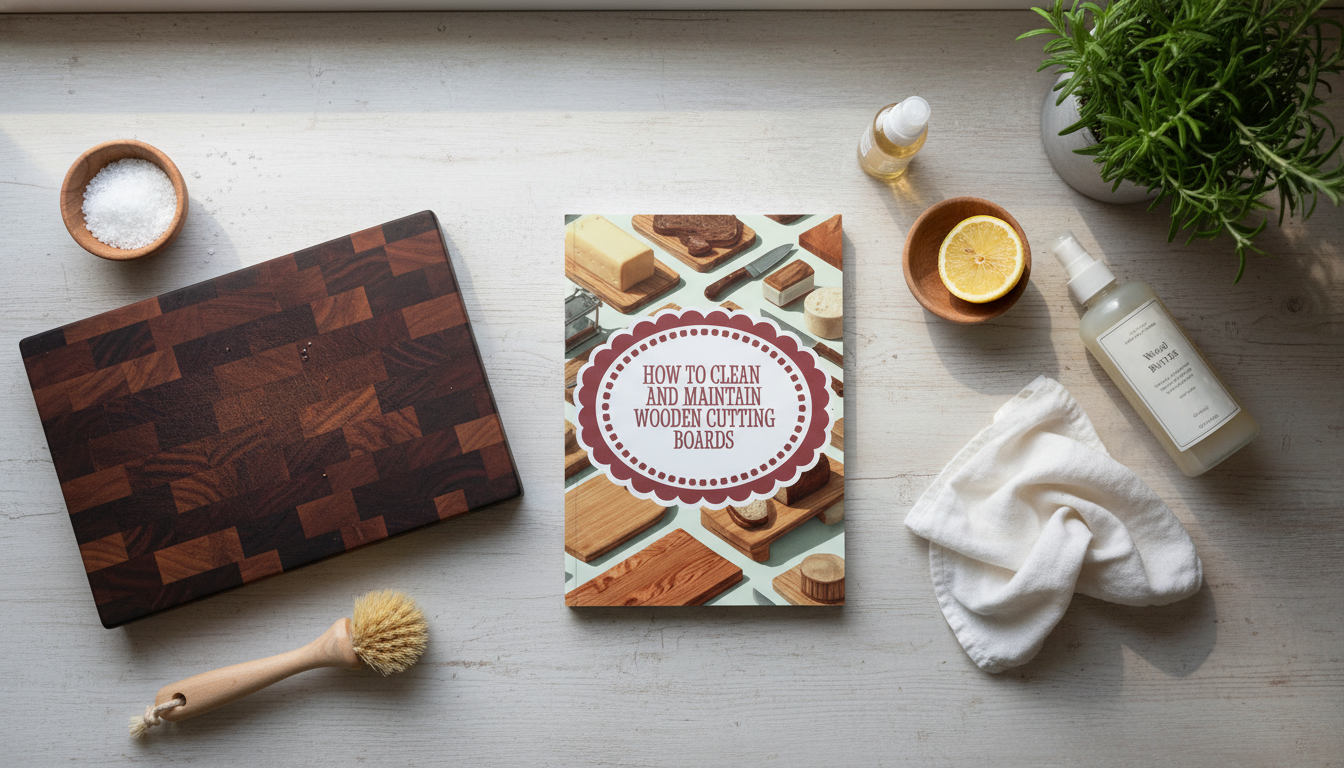
For strong odors (onion, garlic, fish): sprinkle coarse salt, rub with half a lemon, then rinse and dry thoroughly. This quick deodorizing step is often all you need between deeper cleanings.
Safe Sanitizing for Raw Meat, Poultry, and Seafood
Wood can be used safely for food prep when it’s cleaned promptly and sanitized after raw proteins. If possible, keep a dedicated board for raw meat, poultry, and seafood, and sanitize it after contact.
- Option 1: Diluted bleach solution. Follow the bleach label’s dilution directions for food-contact surfaces, apply briefly, then rinse well and dry completely.
- Option 2: 3% hydrogen peroxide. Apply to the surface for a short contact time, then rinse and dry thoroughly.
- Never mix cleaning chemicals. If switching methods, rinse between steps and avoid combining products.
For additional food-safety guidance on cutting boards and kitchen sanitation, review the USDA’s cutting board recommendations at USDA FSIS: Cutting Boards and the CDC’s basics at CDC: Four Steps to Food Safety.
Deep Clean and Deodorize (Weekly or As Needed)
If your board looks dull, feels rough, or holds onto smells, a deeper refresh restores it quickly—no special tools required.
- Salt scrub: sprinkle coarse salt over the surface, scrub with a cut lemon, and let sit a few minutes before rinsing and drying.
- Baking soda paste for stains: mix baking soda with a little water, rub gently on the stain, then rinse and dry fully.
- Light resurfacing for fuzzy grain: once the board is completely dry, sand lightly with fine-grit sandpaper, wipe away dust, then oil.
- Inspect seams and add-ons: handles, juice grooves, and non-slip feet can trap moisture—make sure everything dries fully after washing.
Conditioning: Oiling and Waxing Schedule
Oiling is what keeps wood stable. A conditioned board is less likely to crack, absorbs fewer odors, and wipes clean more easily.
- When to oil: when the surface looks dry or chalky, or when water absorbs quickly instead of beading. For many kitchens, that’s every 2–4 weeks.
- How to oil: apply a thin coat of food-safe mineral oil to all sides and edges, let it soak in, then wipe off the excess.
- Optional board cream: a mineral oil + beeswax blend adds extra moisture resistance and a slightly smoother feel.
Wooden Cutting Board Care Checklist by Frequency
| When |
Task |
Quick Notes |
| After each use |
Wash with mild soap; dry immediately; air-dry upright |
Clean both sides; avoid soaking |
| After raw meat/seafood |
Sanitize (label-diluted bleach solution or 3% hydrogen peroxide) |
Rinse and dry thoroughly; do not mix chemicals |
| Weekly/as needed |
Deodorize with salt + lemon; spot-treat stains with baking soda |
Let the board fully dry afterward |
| Every 2–4 weeks |
Oil with food-safe mineral oil (all sides/edges) |
Wipe off excess; add board cream if desired |
| Occasionally |
Light sanding for raised grain; re-oil |
Use fine grit; remove dust before oiling |
Storage Tips to Prevent Warping and Cracks
When to Repair or Replace
Printable Routine: Digital Checklist for Consistent Care
FAQ
Can a wooden cutting board be sanitized safely?
Yes—sanitize after raw meat, poultry, or seafood using a properly diluted bleach solution (per label directions) or 3% hydrogen peroxide, then rinse and dry completely. Avoid soaking and prioritize full drying to help prevent warping.
What oil is best for wooden cutting boards?
Food-safe mineral oil is a top choice because it’s stable and won’t go rancid. A board cream (mineral oil + beeswax) can add extra water resistance and a smoother finish.
How often should a wooden cutting board be oiled?
Oil whenever the surface looks dry or starts absorbing water quickly—often every 2–4 weeks for frequently used boards. New or heavily used boards may need conditioning more often at first.
Recommended for you











Leave a comment