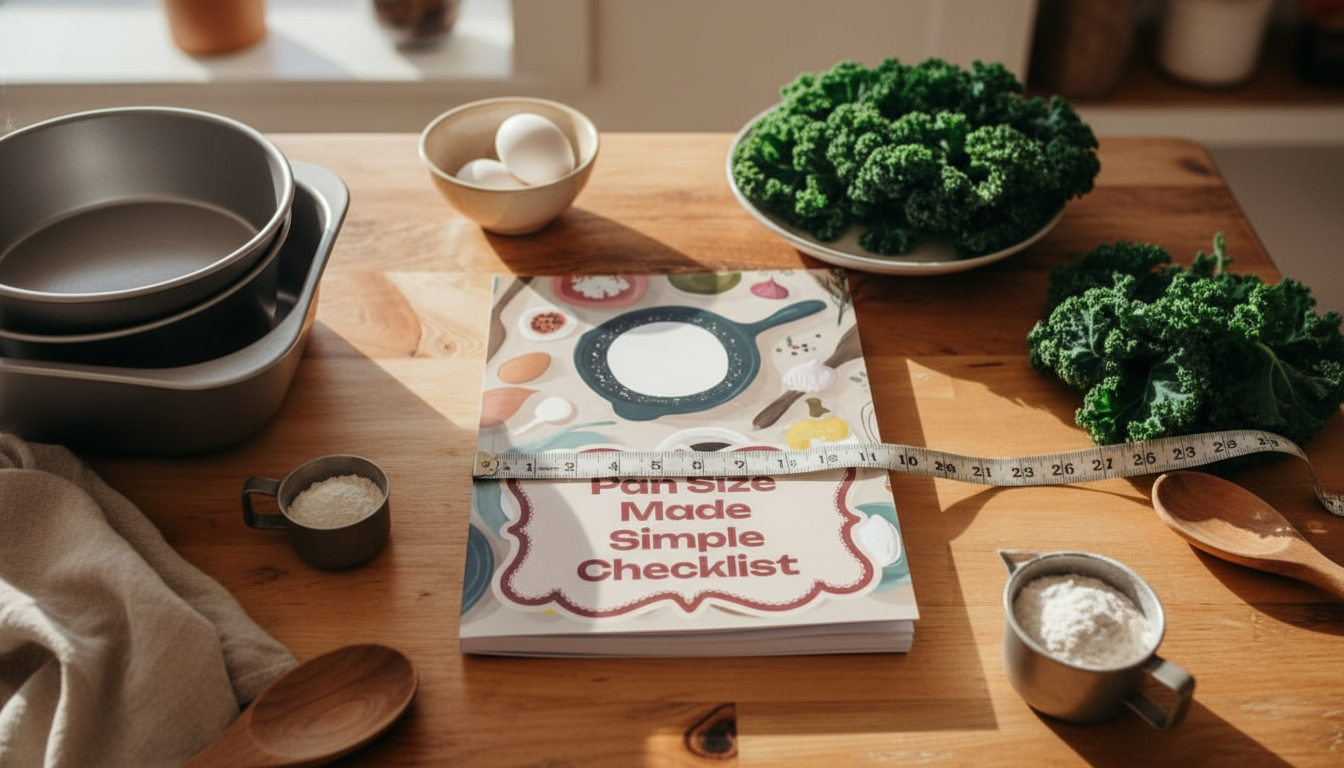
Pan swaps shouldn’t derail dinner or ruin a bake. A simple, printable pan size checklist makes it easier to choose the right dish, adjust amounts when needed, and estimate portions for the table—whether it’s weeknight casseroles, sheet-pan meals, brownies, or party trays. If you want a quick-reference you can keep right where you cook, the Pan Size Made Simple Checklist (printable guide) is designed for day-to-day decisions: measure once, note your “go-to” pans, and cook with fewer surprises.
Pan labels sound straightforward—until an “8-inch pan” doesn’t behave like another 8-inch pan. The most reliable way to describe a pan is by its interior dimensions (length × width × height) plus its volume/capacity.
Depth changes outcomes. A deeper pan often needs more time for heat to reach the center, and the top may brown sooner. Material matters, too: glass, metal, ceramic, dark-coated metal, and disposable foil can bake and brown at different rates even when the pan looks “the same size.” A practical rule for swapping is to match baking surface area first, then account for depth and material.
When a recipe calls for a pan you don’t have (or you’re scaling up for guests), a one-minute measurement check keeps you in control.
If you’re organizing your kitchen as you go, it can help to keep quick tools in one spot—like a measuring cup, a marker for labeling, and even a fridge system that prevents ingredient “mystery counts.” The Refrigerator Egg Storage Box is a simple add-on that keeps baking staples visible and easy to grab.
Most successful swaps follow the same logic: match the surface area so the batter or food sits at a similar thickness, then fine-tune time and temperature.
For deeper baking guidance and common conversions, two helpful references are King Arthur Baking’s pan size volumes and Wilton’s pan substitution tips.
| Pan size/type | Approx. capacity | Common swap/equivalent | Typical servings (guide) |
|---|---|---|---|
| 8×8-inch square | About 2 quarts | Round 9-inch (similar area) | 6–9 pieces |
| 9×9-inch square | About 2.5 quarts | 8×8-inch (thicker batter, longer time) | 9–12 pieces |
| 9×13-inch rectangle | About 3.5–4 quarts | Two 8×8-inch pans (similar total area) | 12–18 pieces |
| Half sheet pan (approx. 18×13-inch) | Shallow; varies by rim | Two quarter sheets | Large-batch roasting/party tray |
| Quarter sheet pan (approx. 13×9-inch) | Shallow; varies by rim | One 9×13-inch is larger (not equal) | Small-batch roasting/bars |
| 9-inch round cake pan | Varies by depth | 8-inch round (thicker, longer time) | 8–12 slices |
| Standard loaf pan (commonly 9×5-inch) | About 8 cups | 8.5×4.5-inch (taller loaf, longer time) | 8–12 slices |
For desserts, choose your cut size first: smaller squares for buffets, larger pieces for plated desserts. And if you’re setting a table for a crowd, having consistent serving pieces helps the spread feel intentional; the 24-Piece High-End Stainless Steel Cutlery Set for 6 is a polished option for everyday-to-entertaining use.
Food safety matters when scaling up, cooling large dishes, or packing leftovers. For practical guidance, see the USDA’s safe food handling resources.
If your checklist routine includes prepping fruit for salads, brunch boards, or dessert toppings, the Stainless Steel Fruit Prep Tool Set can speed up coring, scooping, and slicing—especially when you’re already in “mise en place” mode.
Surface area and depth drive most bake-time changes: a larger-area pan spreads batter thinner so it bakes faster, while a smaller/deeper pan makes batter thicker so it bakes slower. Start checking earlier for wider pans and later for deeper ones, and watch browning closely—especially when switching materials like dark metal or glass.
Yes—this is a common swap because the total baking area is similar. Divide batter evenly, bake the pans on the same rack when possible, and start checking a bit earlier since smaller pans have more edge area that can bake faster.
Fill the pan with water using a measuring cup until it’s comfortably full (not to the brim), then total the cups you added. Convert as needed: 4 cups equals 1 quart.









Leave a comment