Meat Smart: Safe Handling at Home
Safe meat handling is a simple routine built around clean hands, cold storage, separation from ready-to-eat foods, and accurate cooking temperatures. Use this guide as a practical kitchen workflow—from shopping and storing to thawing, cooking, and leftovers—so meals stay both delicious and safe.
The four rules that prevent most kitchen mistakes
Most kitchen slip-ups fall into a few predictable categories. Lock in these four habits and food safety becomes almost automatic.
- Clean: Wash hands with soap and warm water for 20 seconds before and after handling raw meat; sanitize counters, boards, and sinks after contact.
- Separate: Keep raw meat and its juices away from produce, cooked foods, and utensils used for eating; dedicate a cutting board for raw proteins when possible.
- Chill: Refrigerate or freeze quickly; keep cold foods cold during transport and prep, and avoid leaving raw or cooked meat at room temperature.
- Cook: Use a food thermometer; color alone is not a reliable safety check.
Buying and transporting meat safely
Safety starts at the store. A few small choices reduce mess, prevent temperature abuse, and lower the odds of cross-contamination in your cart and car.
- Choose packages that are cold, intact, and not leaking; place them in a separate produce bag to contain drips.
- Pick up meat last during shopping; head straight home and refrigerate promptly.
- Use an insulated bag or cooler for longer trips or warm days; keep raw meat separate from ready-to-eat items like deli foods or fruit.
- If unsure how long food sat in the “danger zone” (40°F–140°F), treat it as unsafe rather than risking illness.
For additional guidance on safe handling from purchase to plate, see the USDA’s recommendations at USDA FSIS — Safe Food Handling.
Refrigerator and freezer storage basics
Cold storage protects both safety and quality, but only if temperatures and placement are consistent.
- Set refrigerator to 40°F (4°C) or below and freezer to 0°F (-18°C); use an appliance thermometer if needed.
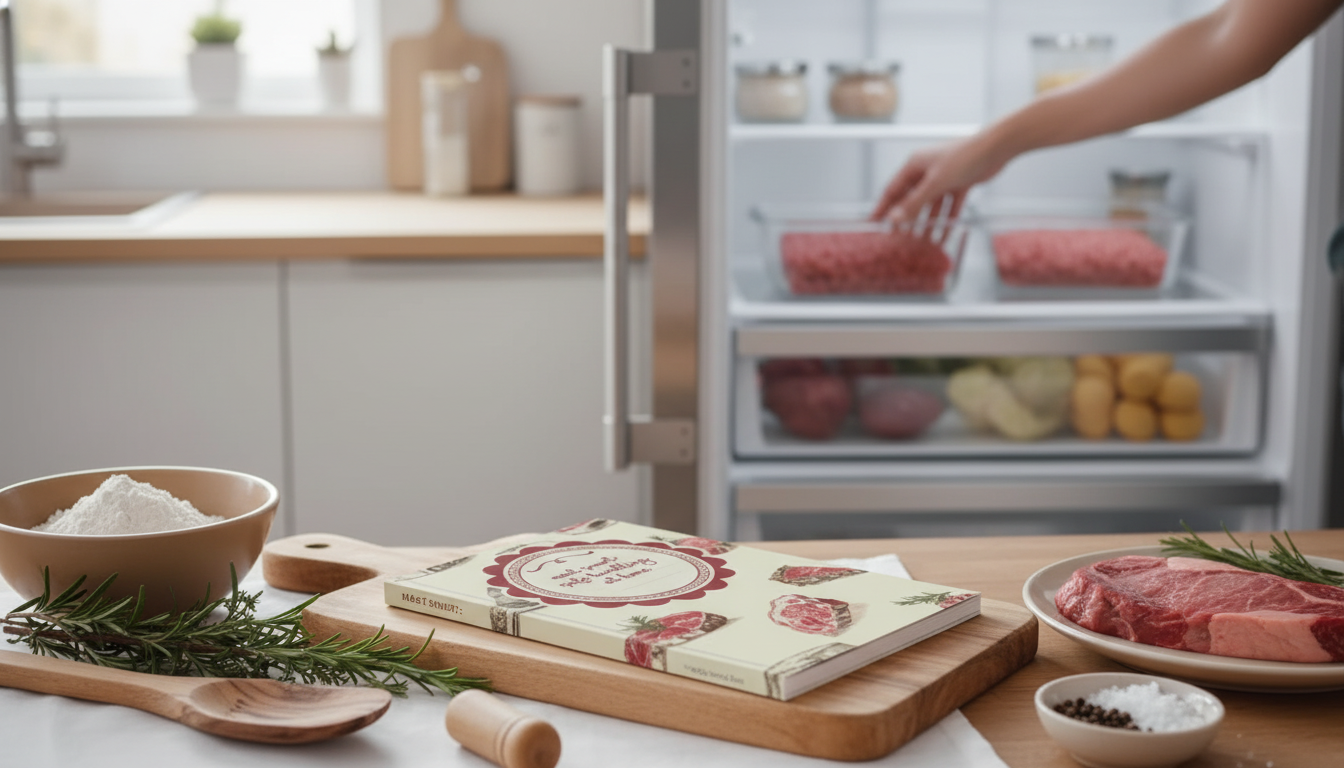
- Store raw meat on the bottom shelf in a rimmed tray to prevent drips onto other foods.
- Label packages with the purchase date; rotate older items forward.
- Freeze if not using soon; freezing stops bacterial growth (but does not kill all bacteria), so safe handling still matters after thawing.
Quick storage timeline guide (quality and safety)
| Item |
Refrigerator (40°F or below) |
Freezer (0°F) |
| Raw poultry (pieces or whole) |
1–2 days |
Up to 9–12 months (best quality) |
| Ground meat (beef/pork/lamb/veal) |
1–2 days |
Up to 3–4 months (best quality) |
| Steaks, chops, roasts |
3–5 days |
Up to 6–12 months (best quality) |
| Cooked leftovers (meat/poultry dishes) |
3–4 days |
2–3 months (best quality) |
Thawing without risk
Thawing is one of the most common ways meat accidentally spends too long in the danger zone. Use methods that keep the outside cold while the center loosens.
- Refrigerator thawing: Safest method; plan ahead (larger cuts may take a day or more). Keep thawing meat in a tray to catch drips.
- Cold-water thawing: Submerge in a leak-proof bag; change water every 30 minutes; cook immediately after thawing.
- Microwave thawing: Use the defrost setting and cook right away; some areas may begin to warm during microwaving.
- Avoid counter thawing: Room-temperature thawing lets the outer surface enter the danger zone while the center is still frozen.
Prep habits that prevent cross-contamination
Cross-contamination is usually a workflow issue: the same hands, boards, or plates touch raw meat and then touch ready-to-eat food. A few “always/never” rules keep your prep line clean.
- Wash hands before and after handling raw meat; scrub under nails and between fingers.
- Use separate boards and knives for raw meat and ready-to-eat foods; if reusing, wash with hot soapy water and sanitize.
- Do not rinse raw poultry or meat—splashes can spread bacteria around the sink and nearby surfaces.
- Marinate in the refrigerator, not on the counter; discard used marinade or boil it before using as a sauce.
- Use clean plates and tongs for cooked food; never return cooked meat to the plate that held it raw.
For a broader overview of preventing foodborne illness at home, review CDC — Food Safety.
Cooking temperatures that matter (and how to check)
Leftovers, cooling, and reheating
Helpful kitchen tools that support safer routines
FAQ
Should raw chicken or meat be washed before cooking?
No. Rinsing can spread bacteria through splashes and droplets. Cooking to the right internal temperature is what makes it safe.
What is the safest way to thaw meat quickly?
Cold-water thawing in a leak-proof bag with water changed every 30 minutes, followed by immediate cooking, is a safe fast method. Microwave thawing is also acceptable if you cook right away.
How long can cooked meat sit out before refrigerating?
Up to 2 hours at room temperature (or 1 hour if it’s very warm). After that, the risk of bacterial growth rises quickly.
Recommended for you









Leave a comment